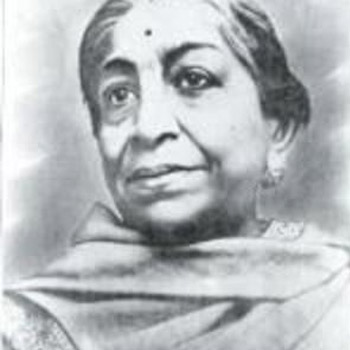
Shri Gulzarilal Nanda
Shri Gulzarilal Nanda was an esteemed Indian politician, economist, and labor rights advocate who served as Interim Prime Minister twice during critical transitions in India's early post-independence history. Born on July 4, 1898, in Sialkot (now in Pakistan), he dedicated his life to Gandhian principles, social reform, and public service until his passing on January 15, 1998. His legacy endures as a symbol of integrity amid political turbulence.
Early Life and Education
Nanda grew up in Punjab and pursued studies in Lahore, Agra, and Allahabad, where he researched labor issues at Allahabad University from 1920 to 1921. He later taught economics at National College in Bombay starting in 1921, blending academic rigor with activism. His early exposure to economic disparities fueled a lifelong commitment to workers' welfare, leading him to join Mahatma Gandhi's Non-Cooperation Movement the same year.
Political Rise and Labor Leadership
Nanda's political journey began with the Indian National Congress, where he became secretary of the Ahmedabad Textile Labour Association from 1922 to 1946. Elected to Bombay's legislative assembly in 1937, he shaped labor policies as parliamentary secretary for labor and excise, later serving as Bombay's labor secretary from 1946 to 1950. He played a pivotal role in founding the Indian National Trade Union Congress and represented India at the 1947 International Labour Conference in Geneva.
Tenure as Interim Prime Minister
Following Jawaharlal Nehru's death on May 27, 1964, Nanda assumed the role of Interim Prime Minister for 13 days until Lal Bahadur Shastri's election. He repeated this duty after Shastri's sudden demise on January 11, 1966, again for 13 days, ensuring stable transitions. Prior roles included Union Minister for Labour and Employment (1962–1963) and Home Affairs (1963–1966), plus later stints as Railways Minister (1970–1971).
Contributions to Haryana and Kurukshetra
In 1968, Nanda chaired the Kurukshetra Development Board until 1990, revitalizing the site's religious heritage by renovating pilgrimage spots like Brahma Sarovar, Sannihit Sarovar, Jyotisar, and others. His efforts transformed Kurukshetra into Haryana's cultural capital, accommodating massive gatherings during events like solar eclipses. A memorial on Brahma Sarovar's banks honors his 22-year dedication to the region.
Principles, Later Years, and Legacy
A principled figure, Nanda resigned from Congress in 1971 over corruption and politics he deemed unethical, opposing Indira Gandhi's Emergency as a betrayal of democratic sacrifices. He earned the Bharat Ratna in 1997, India's highest civilian honor, recognizing his steadfast service. Nanda's life exemplified selfless governance, labor advocacy, and cultural preservation, leaving an indelible mark on modern India.