Current Affairs 2026
Spain beat Argentina to win the World Cup for the second time in history[7/20/2026]
Spain ended a 16-year wait as they stunned Argentina with an all-timer performance to win the 2026 FIFA World Cup with a 1-0 win in the final at the MetLife Stadium in New Jersey. Kylian Mbappe won back to back Golden Boots after the French sensation topped the goal-scoring charts of the 2026 FIFA World Cup with 10 goals. The other awards were swept by the World Cup winning Spanish team as goalkeeper Unai Simon won the Golden Glove after getting beat only once the entire tournament while midfielder Rodri was adjudg
Latest Articles
Kakori Train Robbery
Just after nine in the evening, a passenger train rattled through the ...
Devi Ahilyabai Holkar
In This ArticleEarly Life and OriginsMarriage into the Holkar DynastyY ...
The Battles of Panipat
In This ArticleQuick AnswerWhy Panipat, Again and Again?First Battle o ...
Battle of Buxar
On the morning of 22 October 1764, three of the most powerful figures ...
Pulitzer Prizes Winners 2026
The Pulitzer PrizesIn the latter years of the 19th century, Joseph Pulitzer stood out as the very em
Sahitya Akademi Award 2025
Sahitya Akademi has announced its annual Sahitya Akademi Awards in 24 Indian languages recognised by
98th Academy Awards (Oscar) 2026
Actor in a Leading Role - Michael B. Jordon (for Sinners) Actor in a Supporting Role - Sean Penn (f
Understanding the Human Digestive System
The human digestive system is a marvel of intricate design and function, comprising a series of orga
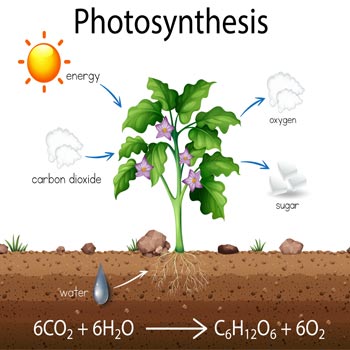
Photosynthesis
Photosynthesis is the process by which green plants and some other organisms convert light energy fr
Vitamins and their Significance to a Human Body
What Is a Vitamin?A vitamin is an organic compound that the body needs in very small quantities to c

Gig Workforce in India and Gig Economy
Gig Workforce in India: Trends, Challenges & Future OutlookFrom 7.7 million workers today to a p
17th BRICS Summit 2025
The 17th BRICS Summit 2025, held in Rio de Janeiro, Brazil, from 6 to 7 July 2025, marked a piv
Capital Market
Capital market is one of the most important segments of the Indian financial system. It is the marke

Important Computer Terminology
Artificial Intelligence (AI): Artificial Intelligence refers to the simulation of human intelligence
History of the Computer
A nineteenth century professor Charles Babbage at Cambridge University is considered the father of m
Computer Memory
Computer memory is any physical device capable of storing information temporarily or permanently. Th
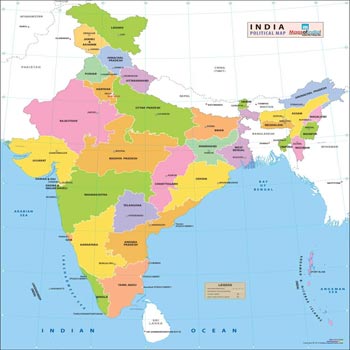
Geographical Sobriquets (Surname)
Geographical Sobriquets in IndiaSurnameNameBengal’s SorrowDamodar RiverBlue MountainsNilgiri HillsPi
Air Masses Fronts and Cyclones
Air Mass: An air mass may be defined as a large body of air whose physical properties, especially te
Atmosphere
The atmosphere is a thick gaseous envelope which surrounds the earth from all sides and is attached

Seven Wonders in Modern Era

Petra, Jordan Perched on the edge of the Arabian Desert, Petra was the capital of the Nabataean kingdom of King Aretas IV (9 B.C. to A.D. 40). Petra is famous for its many stone structures such as a 138-foot-tall (42-meter-tall) temple carved with classical facades into rose-colored rock. The ancien
Read All Worlds WonderInter University Accelerator Centre (IUAC), an Autonomous Centre of University Grants Commission under Ministry of Education, Govt. of India invites applications from qualified Indian Nationals for the following positions on Direct Recruitment basis: -
Scientist- C (Group-A).Total Post: 05*(UR-03, EWS-01, ST-01)
Junior Engineer-C (Group-B), Total Post: 02(UR-01, OBC-01)
Library Assistant- C (Group-B), Total Post: 01(UR)
For more details, visit the official website https://www.iuac.res.in/en/vacancies
Publish Date: 7/3/2026
Closing Date: 8/4/2026
Second Five Years Plan
The Second Five-Year Plan (1956-57 to 1960-61) sought to promote a pattern of development, which would ultimately lead to the establishment of a socialistic pattern of society in India. Its main aims
Third Five Years Plan
The Third Plan (1961-62 to 1965-66) aimed at securing a marked advance towards self-sustaining growth. Its immediate objectives were to : Secure an increase in the national income of over five per ce
First Five Years Plan
Keeping in view the large-scale import of food grains in 1951 and inflationary pressures on the economy, the First Plan (1951-56) accorded the highest priority to agriculture including irrigation and
Atal Pension Yojana (APY)
The Finance Minister has announced a new initiative called Atal Pension Yojana (APY) in his Budget Speech for 2015-16. The APY will be focussed on all citizens in the unorganised sector, who join the
Pradhan Mantri Fasal Bima Yojana
The Union Cabinet chaired by the Prime Minister Shri Narendra Modi has approved the ‘Pradhan Mantri Fasal Bima Yojana’ - a path breaking scheme for farmers’ welfare. The highlights of this scheme are
Pradhan Mantri Jan Dhan Yojana
The Prime Minister launched the Pradhan Mantri Jan Dhan Yojana at a National level function on 28th August 2014. Besides the launch function at Delhi, simultaneous launch functions of the Yojana were
Medical Council of India (MCI)
Headquarter: New Delhi Function of the Organization: The Medical Council of India was established in 1934 under the Indian Medical Council Act, 1933, now repealed, with the main function of establishing uniform standards of higher qualifications in m
Competition Commission of India
Founded on: 14 October 2003 Headquarter: New Delhi The function of the Organization: Competition is the best means of ensuring that the ‘Common Man’ or ‘Aam Aadmi’ has access to the broadest range of goods and services at the most competitive prices.
Advertising Standards Council Of India (ASCI)
Founded: 1985 Headquarter: Mumbai Function and Objective of Organization: Truthful, fair, and non-derogatory to competitors. Advertisements should not be misleading and plagiarized.Within the bounds of generally accepted standards of public decency