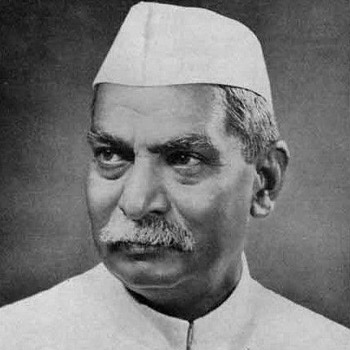
Gopal Krishna Gokhale
Gopal Krishna Gokhale (9 May 1866 – 19 February 1915) was a distinguished Indian political leader, thinker, and social reformer who played a pivotal role in the early Indian independence movement. Born into a Marathi Hindu Chitpavan Brahmin family in Ratnagiri district of present-day Maharashtra, Gokhale overcame financial hardships to pursue an English education. He graduated from Elphinstone College in Bombay in 1884, where he was deeply influenced by Western political philosophers like John Stuart Mill and Edmund Burke, and also mentored by the prominent social reformer Justice Mahadev Govind Ranade, who regarded him as his protégé or "Manas Putra".
Gokhale's political career began in earnest when he joined the Indian National Congress in 1889. He was a leading figure among the moderate faction of the Congress, advocating for gradual social reforms and self-rule within the constitutional framework under British rule. He believed in dialogue and cooperation with the British authorities rather than confrontational or extremist methods. His moderate approach often put him at odds with leaders like Bal Gangadhar Tilak, who represented more radical views. Gokhale served as the Honorary Secretary of the Sarvajanik Sabha in Pune and later held important legislative positions, including membership in the Bombay Legislative Council (from 1899) and the Imperial Legislative Council (from 1902).
A noteworthy achievement in his political journey was his presidency of the Indian National Congress in 1905. During his tenure, he strongly promoted education, self-governance, and social justice, emphasizing the removal of untouchability and caste discrimination, and championing women’s education and rights. In 1905, he also founded the Servants of India Society, an organization aimed at training young Indians for public service and fostering national development through education and social work. The society organized efforts like mobile libraries, night schools for industrial workers, and wide dissemination of civic and patriotic awareness.
Gokhale was also an effective legislator, known for his sharp intellect and eloquent speeches, particularly on economic matters and budgets. He tirelessly protested oppressive land revenue policies and the exploitative indentured labor system that affected Indians abroad. Notably, in the Imperial Legislative Council, he argued for reforms such as expanding Indian representation, promoting primary education, improving workers' rights, and reducing taxation that disproportionately burdened Indians. His criticisms sometimes antagonized British officials, including Lord Curzon, the Viceroy at the time.
He played a significant role in the formulation of the Morley-Minto Reforms of 1909, which expanded Indian participation in governance. Additionally, Gokhale had a profound influence on Mahatma Gandhi, whom he mentored during Gandhi's early political activism in South Africa. Gandhi referred to Gokhale as "pure as crystal, gentle as a lamb, brave as a lion", acknowledging him as a political paragon and his mentor.
Beyond politics, Gokhale was dedicated to social reform: he fought against caste discrimination, advocated for the upliftment of marginalized communities, and worked tirelessly for women's education. His founding of the Ranade Institute of Economics in 1908 reflected his commitment to education as a means to social progress.
Gopal Krishna Gokhale passed away on 19 February 1915 at the age of 48 in Pune. His legacy endures as a guiding light for constitutional nationalism, social justice, and educational upliftment in India’s journey to independence.
In summary, Gokhale’s life was marked by principled leadership that combined intellectual rigor, moderate politics, and deep commitment to social reform. His efforts laid foundational stones for India's self-rule and the broader independence movement, influencing generations of Indian leaders and reformers.