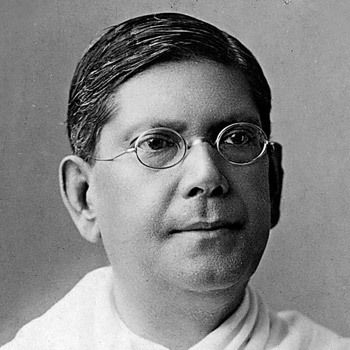
Sarvepalli Radhakrishnan
Dr. Sarvepalli Radhakrishnan was a distinguished Indian philosopher, scholar, educator, statesman, and the second President of India, renowned for bridging Indian and Western philosophies and his profound influence on modern India’s intellectual and political landscape. Born on September 5, 1888, in Tiruttani, Tamil Nadu, he hailed from a Telugu-speaking Brahmin family. His early education began in Tiruttani and Vellore, and he later completed his bachelor's and master's degrees in philosophy at Madras Christian College, where he showed exceptional academic brilliance.
Radhakrishnan's academic career was marked by prestigious faculty positions at Mysore, Calcutta, and Andhra Universities and a significant international role as professor of Eastern religions and ethics at the University of Oxford. His philosophical writings championed Indian spiritual traditions, especially Hinduism and Vedanta, presenting them in a way that resonated with Western thinkers, fostering a global appreciation for Indian philosophy. He emphasized the compatibility of science and religion, advocating a pluralistic and evolving conception of Hinduism grounded in profound ethical and metaphysical inquiry.
In addition to his academic achievements, Radhakrishnan played major roles in diplomacy and politics. Serving as India’s Ambassador to the Soviet Union (1949–1952), the first Vice President (1952–1962), and the second President of India (1962–1967), he was a firm advocate for moral and intellectual leadership, global peace, and democratic pluralism. His presidency was noted for its philosophical depth and dedication to upholding India’s constitutional values. Radhakrishnan’s birthday, September 5, is celebrated across India as Teacher’s Day, a tribute to his unwavering commitment to education.
He received numerous honors, including the Bharat Ratna in 1954, the Knight Commander of the Order of the British Empire in 1931, and the Templeton Prize in 1975, reflecting the global recognition of his contributions to philosophy, education, and statesmanship. Radhakrishnan passed away on April 16, 1975, leaving behind a rich intellectual and cultural legacy that continues to inspire.
Early Life and Education
Born in a small town in colonial India, Radhakrishnan excelled in his schooling, earning scholarships that paved the way for his higher education at Madras Christian College. His academic journey laid the foundation for a lifelong engagement with philosophy, particularly Indian metaphysics and ethics.
Philosophical Contributions
Radhakrishnan’s work provided a sophisticated interpretation of Hindu philosophy, emphasizing its ethical and spiritual vitality. He aimed to harmonize Eastern and Western thought, advocating a pluralistic worldview where science and spirituality coexisted, and highlighted Hinduism as a dynamic, evolving tradition rather than a dogmatic religion.
Academic and Diplomatic Career
Radhakrishnan held professorships at major Indian universities and Oxford. His diplomatic tenure as ambassador and political roles in independent India reflected his dedication to international peace and India's cultural and philosophical identity.
Presidency and Legacy
As President of India, he was a moral compass and intellectual beacon. His birthday is honored as Teacher’s Day in India, celebrating his belief in education as a transformative force. Radhakrishnan remains an enduring symbol of wisdom, educational excellence, and philosophical inquiry.
This comprehensive article captures the essence of Sarvepalli Radhakrishnan's life, work, and enduring impact on India and the world.