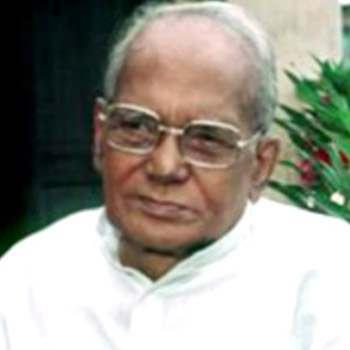
Aurobindo Ghosh
Sri Aurobindo Ghosh (1872–1950) was a towering figure in India’s modern history, whose life journey intricately wove together strands of nationalism, philosophy, poetry, and spiritual transformation. Born on August 15, 1872, in Calcutta (now Kolkata), India, to an educated and progressive family, Aurobindo emerged as a scholar, revolutionary, and ultimately a spiritual guru and philosopher whose influence extends beyond Indian independence to global spirituality and philosophy.
Early Life and Education
Aurobindo was born into a well-to-do Bengali family - his father was a civil surgeon, and his mother was an advocate for women’s rights. At age seven, he was sent to England for education, studying at St. Paul’s School in London and later at King’s College, Cambridge, where he excelled in classical languages like Latin and Greek. Despite qualifying for the Indian Civil Service, he deliberately disqualified himself to avoid serving the colonial regime. He returned to India in 1893.
Civil Service and Early Political Involvement
Back in India, Aurobindo took up various administrative roles in the princely state of Baroda, working in departments such as revenue and education, eventually becoming vice-principal at Baroda College. Though officially barred from political engagement as a civil servant, he covertly contributed articles advocating Indian nationalism to journals like Indu Prakash and later Bande Mataram.
Nationalist Leader and Revolutionary Activities
The early 1900s marked Aurobindo’s full immersion into India’s freedom struggle, particularly after the controversial Partition of Bengal in 1905 ignited nationalist fervor. In 1906, he relocated to Calcutta, becoming a prominent leader of the radical wing of the independence movement. He advocated for complete and immediate independence from British rule, contrasting with the more moderate approaches of the Indian National Congress then.
He was closely associated with revolutionary groups such as the Anushilan Samiti, actively encouraging youth involvement in physical and martial training for resistance. Aurobindo's newspaper Bande Mataram was pivotal in spreading nationalist sentiment. His leadership and writings earned him the title “the Prophet of Indian Nationalism”. However, his revolutionary role led to his imprisonment during the Alipore Bomb Case in 1908, where he was charged with conspiracy against British authorities but was ultimately released due to lack of conclusive evidence.
Spiritual Transformation and Integral Yoga
In 1910, Aurobindo withdrew from active politics and moved to Pondicherry, a French colony on India’s southeastern coast, choosing to focus on his spiritual evolution. There, he developed Integral Yoga, a philosophy and practice aimed at the evolution of human consciousness. Unlike traditional yoga seeking liberation (moksha) from the world, Aurobindo’s Integral Yoga sought a spiritual realization that transforms human nature and leads to a divine life on Earth.
Aurobindo’s extensive writings during this phase include The Life Divine, which outlines the philosophical underpinnings of his vision of human evolution, and The Synthesis of Yoga, detailing practical spiritual methods. He also composed Savitri, an epic spiritual poem praised for its profound depth and poetic mastery.
Establishment of Sri Aurobindo Ashram and Later Years
In 1926, alongside his spiritual collaborator Mirra Alfassa, known as “The Mother”, Aurobindo founded the Sri Aurobindo Ashram in Pondicherry. The ashram became a hub for seekers dedicated to practicing Integral Yoga and advancing spiritual consciousness. The ashram remains a vibrant spiritual community today. Aurobindo lived in Pondicherry for about four decades, shaping spiritual thought and inspiring generations of followers worldwide. He passed away on December 5, 1950, leaving behind a rich legacy that spans nationalism, poetry, philosophy, and spirituality.
Legacy
Sri Aurobindo’s legacy is vast and multifaceted. As a nationalist, he pioneered direct action strategies and inspired the freedom struggle with his radical vision of Swaraj (self-rule). As a philosopher and yogi, he reshaped modern Indian spirituality with Integral Yoga, influencing global spiritual movements. His poetic works give voice to his spiritual ideals, blending Indian tradition with modern literary sophistication.
In essence, Sri Aurobindo Ghosh’s life represents a unique synthesis of political activism and spiritual transcendence, making him one of India’s most significant visionary leaders and a timeless symbol of India's quest for freedom and spiritual evolution.