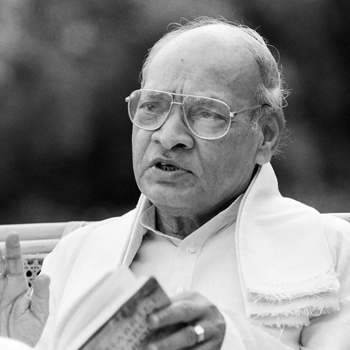
Womesh Chandra Banerjee
Womesh Chandra Banerjee (also spelled Womesh Chunder Bonnerjee or Umesh Chandra Banerjee) was a pioneering Indian barrister and nationalist leader who played a monumental role in the early Indian independence movement. Born on December 29, 1844, in Calcutta (now Kolkata), West Bengal, he came from a respectable Rarhi Kulin Brahmin family with deep roots in Bengal. His father, Girish Chunder Bonnerjee, was an attorney, and his mother was Saraswati Devi. Bonnerjee received his early education at the Oriental Seminary and the Hindu School in Calcutta, solidifying his foundation in both traditional and contemporary learning.
In 1862, Banerjee began his legal career as a clerk for a law firm connected to the Supreme Court of Calcutta. Two years later, in 1864, he traveled to England on a scholarship to study law. He joined the prestigious Middle Temple and was called to the English Bar in June 1867. During his time in England, Banerjee became deeply involved in political and social causes related to India. He served as the general secretary of the London Indian Society, founded by Dadabhai Naoroji, a prominent Indian nationalist leader. Additionally, he helped finance the British Committee of the Indian National Congress and supported its publications in London. Notably, Banerjee was the first Indian to contest a seat in the British Parliament as a Liberal Party candidate for the Barrow and Furness constituency, although he was not elected.
Returning to Calcutta in 1868, Banerjee established himself as a highly respected barrister. He gained prominence by defending important cases, including representing Surendranath Banerjee, another freedom fighter, in a contempt of court case. His legal prowess earned him repeated appointments as the first Indian Standing Counsel in 1882, 1884, 1886, and 1887.
Womesh Chandra Banerjee's most enduring legacy is his role as a co-founder and the first president of the Indian National Congress (INC). The inaugural session of the Congress was held in Bombay in December 1885, attended by 72 members. Allan Octavian Hume, a British civil servant, proposed Banerjee as the Congress's president. Under his leadership, the INC began to take shape as a platform for Indians to engage in political dialogue and demand reforms from British rule. In the subsequent 1886 session presided over by Dadabhai Naoroji, Banerjee proposed the creation of provincial standing committees to improve organizational coordination within the Congress. He later presided over the INC again in 1892 at the Allahabad session, where he advocated for India's political independence and condemned unjust British policies such as the salt tax.
Banerjee was also instrumental in expanding the Congress's reach internationally. Alongside Naoroji, Eardley Norton, and William Digby, he helped set up the Congress Political Agency in London, an overseas branch aimed at promoting Indian interests within Britain. Later, in 1893, he, Naoroji, and Badruddin Tyabji founded the Indian Parliamentary Committee in England to further these objectives.
Throughout his life, Banerjee was a strong advocate of the Swadeshi movement, which promoted indigenous goods and boycotted British products. He stood for justice, political reform, and the early foundations of Indian self-governance within the British imperial framework. He passed away on July 21, 1906, in Calcutta at the age of 61. He is remembered as a trailblazer who laid the groundwork for Indian nationalism and political organization, inspiring future generations of freedom fighters.
In summary, Womesh Chandra Banerjee’s contributions can be highlighted as follows:
- First president and co-founder of the Indian National Congress in 1885.
- Pioneer Indian barrister with a distinguished legal career in Calcutta and England.
- The first Indian to contest for a seat in the British Parliament.
- Key figure in establishing Indian political presence in London.
- Advocate for Indian rights, self-rule, and the Swadeshi movement.
- Significant influence in shaping early Indian nationalist politics.
His life and work remain integral to India's journey towards independence and modern political mobilization.