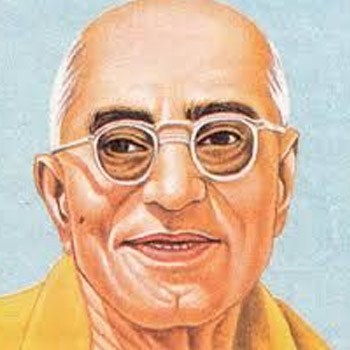
Vinayak Damodar Savarkar
Vinayak Damodar Savarkar, widely known as Veer Savarkar, was a revolutionary, prolific writer, and political thinker who left a complex and enduring legacy in Indian history. Born on May 28, 1883, in Bhagur, near Nashik, Maharashtra, Savarkar’s life was marked by bold activism, literary excellence, and controversial political ideology.
Early Life and Education
Savarkar was born into a Marathi Chitpavan Brahmin family. From a young age, he demonstrated a rebellious spirit and took part in activism, most notably, leading a group of boys in an attack on a mosque during communal tensions when he was just 12 years old. In 1903, together with his brother Ganesh, he founded Mitra Mela, later evolving into the Abhinav Bharat Society, a secret revolutionary group dedicated to ending British rule in India. Savarkar attended Fergusson College in Pune and later studied law in London, where his activism matured and gained international attention.
Revolutionary Activities and Incarceration
During his time in London (1906 -1910), Savarkar became associated with India House and the Free India Society, mentoring young revolutionaries and learning from Russian activists in Paris. He authored "The Indian War of Independence, 1857", which reinterpreted the revolt as a unified struggle for freedom; the book was banned by British authorities for its radicalism. Savarkar was arrested in 1910 for his revolutionary links. Famously, he attempted to escape from a ship in Marseilles to seek asylum in France, but was returned to British custody. He was then sentenced to two life terms totalling 50 years and sent to the infamous Cellular Jail in the Andaman and Nicobar Islands, where he endured harsh and inhumane conditions.
Ideological Contributions: Hindutva
While incarcerated, Savarkar wrote his critical pamphlet, "Essentials of Hindutva" (1923), which became the ideological foundation of Hindu nationalism. He popularized the idea of a collective Hindu identity, transcending caste and regional differences, advocating for Hindu unity and a nation founded on Hindu principles. Savarkar, although an atheist, practiced Hindu philosophy pragmatically and called for militant activism against what he considered threats to Hindu society, most notably, Muslim communities and British colonial rule.
Political Career and Controversies
After his release in 1924, Savarkar became a pivotal leader in the Hindu Mahasabha, developing and promoting the concept of “Hindu Rashtra” or Hindu Nation. He criticized the Congress, especially during the Quit India Movement, and advocated militarization of Hindus. His ideas were highly controversial, creating both passionate followers and strong opposition. In 1948, Savarkar was implicated in the conspiracy to assassinate Mahatma Gandhi but was acquitted due to lack of evidence.
Literary and Social Contributions
Apart from political ideologies, Savarkar was a prolific writer, poet, and historian. He coined new Indian terms for modern inventions and contributed to discussions on history, philosophy, and social reform. His books, such as “The Indian War of Independence” and “Essentials of Hindutva,” remain influential and widely debated in Indian society.
Legacy and Contemporary Relevance
Savarkar died on February 26, 1966, in Bombay (now Mumbai). His legacy is deeply polarizing, he is celebrated by some as a brave patriot and condemned by others for his hardline views. In contemporary politics, especially with the rise of the BJP since 1998 and again in 2014, Savarkar's ideas have re-entered mainstream discourse, sparking debates on nationalism, secularism, and the nature of Indian identity.
Vinayak Damodar Savarkar’s life and thought remain central to understanding modern Indian politics, nationalism, and the ongoing quest for identity and unity.