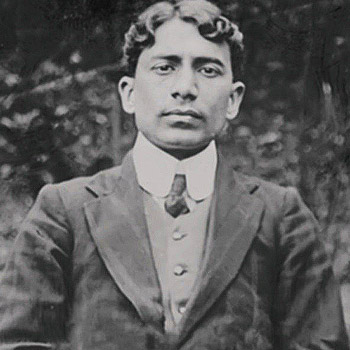
Swami Dayanand Saraswati
Swami Dayanand Saraswati was a trailblazing 19th-century Hindu reformer who reshaped Indian society with his revolutionary ideas, religious zeal, and relentless activism for social justice and education. His legacy remains central to modern India’s intellectual, religious, and social landscape.
Early Life and Spiritual Quest
Dayanand Saraswati was born on February 12, 1824, in Tankara, Gujarat, into a devout Hindu family. While raised in tradition, Dayanand’s innate curiosity drove him to question prevailing dogmas and seek spiritual truth. His journey was marked by deep exploration of Vedic texts, culminating in a singular mission: a return to Vedic principles as the sole foundation of Hindu faith and culture.
Foundation of Arya Samaj
A pivotal achievement of Dayanand’s life was the founding of the Arya Samaj in 1875 in Mumbai. The movement aimed to revitalise Hinduism by rejecting superstitions, idolatry, caste discrimination, and foster respect for the Vedas. Arya Samaj’s famous motto, "Krinvan to Vishvam Aryam" ("Make this world noble"), encapsulates its mission to promote social and spiritual upliftment.
Principle of Arya Samaj
- God is formless, omniscient, and the only being worthy of worship.
- The Vedas are the ultimate authority for spiritual knowledge.
- Truth and righteousness must prevail over falsehood and injustice.
- Education and selfless service lead to societal good.
- Social equality and the upliftment of all, regardless of caste or creed.
Social and Religious Reforms
Dayanand Saraswati’s activism boldly challenged entrenched social evils:
- He denounced child marriage, sati (widow immolation), caste-based discrimination, and untouchability, and worked tirelessly for women’s emancipation and education.
- Dayanand supported widow remarriage and the right to education for all genders and classes.
- Opposed rituals, idol worship, fatalism, and advocated rational theism based on Vedic monotheism.
- Initiated the "Shuddhi" movement to reconvert Hindus from other religions, strengthening Hindu identity.
Educational Legacy
Swami Dayanand underscored the importance of modern education grounded in Vedic ideals. Arya Samaj established numerous schools and colleges, most notably the Dayanand Anglo Vedic (DAV) institutions, which merged science and contemporary subjects with spiritual wisdom. These institutions made quality education accessible throughout India, especially in remote areas.
Literary Contributions and Ideology
Dayanand Saraswati’s writings, like ‘Satyarth Prakash’ (The Light of Truth), expounded his interpretation of the Vedas and addressed various social and religious issues. His work ‘Veda Bhashya’ established an authoritative framework for understanding Vedic philosophy. The journal "Arya Patrika" disseminated his reformist thoughts and principles.
Impact on Nationalism and the Freedom Movement
By championing self-reliance, economic independence, and swadeshi (use of indigenous goods), Dayanand inspired a wave of nationalism that fueled India’s freedom movement. His emphasis on unity, pride in Vedic heritage, and opposition to colonial cultural dominance deeply influenced later reformers and freedom fighters.
Legacy
Swami Dayanand Saraswati’s vision and activism revolutionized Hinduism, education, and social politics in India. The Arya Samaj continues to be a force for social reform, education, and cultural renaissance, inside and outside India. Dayanand is hailed by intellectuals like Dr. Sarvapalli Radhakrishnan as a "maker of modern India", and his principles remain a source of inspiration for those striving for a just, inclusive, and enlightened society.
Summary
Swami Dayanand Saraswati’s heroic stand for Vedic truth, social equality, and educational reform transformed India’s religious and cultural history. His Arya Samaj movement and literary works catalyzed a lasting wave of progress, making him a foundational figure in modern Indian thought and reform.