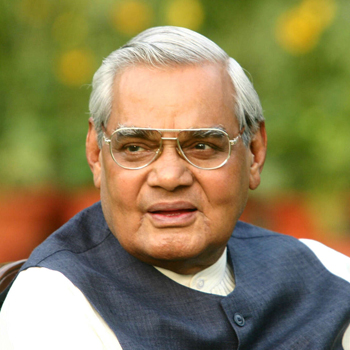
Surendranath Banerjee
Surendranath Banerjee was a pioneering Indian nationalist leader, educator, and reformer who played a foundational role in the early Indian independence movement. Known as "Rashtraguru" (Teacher of the Nation), Banerjee is remembered as one of the first Indians to pass the prestigious Indian Civil Service (ICS) examination and as a prominent advocate for Indian political self-rule using constitutional and moderate methods. His work in founding early nationalist organizations, his leadership in the Indian National Congress (INC), and his advocacy against communal divisions and colonial policies greatly influenced the course of India's struggle for freedom.
Early Life and Education
Born on November 10, 1848, in Calcutta into a respected Brahmin family, Surendranath Banerjee was deeply influenced by progressive and liberal values from an early age. He studied at the University of Calcutta and went to England in 1868 to appear for the Indian Civil Service exam, which he cleared in 1869, becoming only the second Indian to do so. However, his ICS career ended abruptly in 1874 due to a procedural dismissal, which sparked his full immersion into public and political activism.
Political Awakening and Nationalist Leadership
After his dismissal, Banerjee returned to India and began a career as an educator and journalist. In 1876, he co-founded the Indian National Association with Anandamohan Bose, one of the earliest political organizations aimed at uniting Indians across religious lines and mobilizing them against British injustices. He used the newspaper "The Bengalee" as a powerful platform to critique colonial policies and raise nationalist sentiments. His Indian National Association later merged with the Indian National Congress in 1886, helping to create a more unified nationalist front.
Contributions to Indian Nationalism Surendranath Banerjee was a leader of the moderate phase of the nationalist movement. He believed in constitutional methods, dialogue with the British government, and gradual reforms to obtain Indian self-governance. Key contributions include:
- Leading agitations against colonial policies such as the Vernacular Press Act, the Arms Act, and discriminatory ICS exam age limits.
- Strong opposition to the 1905 Partition of Bengal, rallying mass protests to ultimately force the British government to annul the partition.
- Supporting the Swadeshi Movement, calling for boycotting British goods and promoting Indian-made products.
- Twice elected President of the Indian National Congress (1895 and 1902), where he emphasized unity, patriotism, and political education.
- Advocating Hindu-Muslim unity and opposing British policies that sought to divide communities, including the Morley-Minto reforms introducing separate electorates.
Later Years and Legacy
Despite his early leadership, Banerjee's influence declined with the rise of more radical nationalist leaders and the emergence of mass movements led by figures like Mahatma Gandhi. Unlike Gandhi, Banerjee supported more moderate constitutional reforms, including the Montagu-Chelmsford Reforms of 1919, leading to his departure from the Congress and formation of the Indian National Liberation Federation.
He accepted a ministerial post in the Bengal government later in life, which distanced him from many nationalist activists. He was knighted in 1921 but was defeated in the 1923 elections, reflecting the shifting political landscape. Banerjee died on August 6, 1925, leaving behind a legacy as a "Teacher of the Nation" who laid crucial groundwork for Indian political consciousness and constitutional nationalism.
Surendranath Banerjee’s life exemplifies the complexities of early Indian nationalism, his moderate, constitutional approach contrasted with later radical and mass movements but was instrumental in establishing political awareness and unity in colonial India. He is remembered as a visionary educator, journalist, and leader whose pioneering efforts helped shape India's road to independence.