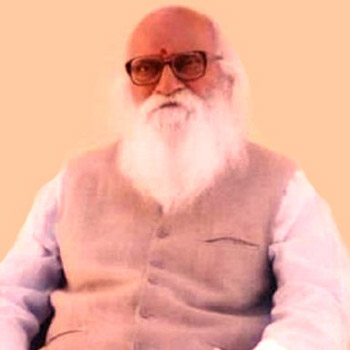
Ram Manohar Lohia
Ram Manohar Lohia was a pioneering figure in India's struggle for independence and one of the nation’s most influential socialist thinkers. His life and work spanned activism, political theory, and legislative struggles, consistently in pursuit of justice, equality, and social transformation.
Early Life and Education
Born on 23 March 1910 in Akbarpur, Uttar Pradesh, Lohia lost his mother at a young age and was raised by his father, Hiralal. He excelled academically, topping his school's matriculation exams and later graduating with a BA from the University of Calcutta in 1929. Lohia chose to study at Frederick William University, Berlin (now Humboldt University), where he researched salt taxation in India for his doctoral thesis, under the influence of Mahatma Gandhi’s socio-economic ideas. The rise of Nazism and exposure to Marxist ideas during his time in Germany deeply impacted his worldview.
Role in the Freedom Movement
Lohia was a key architect of the Indian freedom struggle’s socialist wing. He smuggled political literature, mobilized support during the Quit India Movement, and was involved in clandestine activities such as operating Congress Radio to spread messages against British rule. Lohia was arrested several times for his anti-colonial speeches and underground activities, most notably in 1940 and 1944, when he was jailed and tortured in Lahore Fort before his release in 1946. His comradeship with Jayaprakash Narayan and close association with Mahatma Gandhi shaped his strategies and ideological vision.
Political Career and Ideology
After independence, Lohia played an essential role in the Congress Socialist Party (CSP) and, later, the formation and leadership of various socialist political parties. He was a critical thinker, never following any established ideology blindly and frequently criticizing both Marxism and Gandhism for their inadequacy in the Indian context. Lohia redefined socialism for non-European countries, striving to build a unique Indian socialist model focused on the realities of poverty, caste, and rural oppression. His "Sapt Kranti" (Seven Revolutions) program aimed at eliminating social evils like caste, gender discrimination, and economic inequality.
Social Reforms and Legacy
Ram Manohar Lohia championed civil liberties, the abolition of the caste system, and the empowerment of peasants and localized economies. He advocated the use of Hindi as the official language and the mother tongue in education, seeing language as a vehicle for social equality. His fiery speeches in Parliament, like the one highlighting the disparity between the common man’s income and the Prime Minister’s expenses, showcased his commitment to the marginalized. Lohia wrote extensively, with notable works including "Marx, Gandhi and Socialism" and "Guilty Men of India’s Partition", where he critiqued the failures and shortcomings of contemporary leadership.
Influence and Contemporary Relevance
Lohia’s ideas have continued to inspire socialist movements, writers, artists, and activists in India and beyond. He was a proponent of adapting global political theory to local realities, refusing to let Eurocentric models dictate Indian solutions. His legacy is marked by a persistent quest for a casteless, classless, and gender-equal society and his intellectual challenge to communalism, capitalism, and orthodoxy.
Ram Manohar Lohia stands as a beacon for progressive change, an original thinker who constantly strived to bridge the gap between philosophical ideals and ground realities in India.