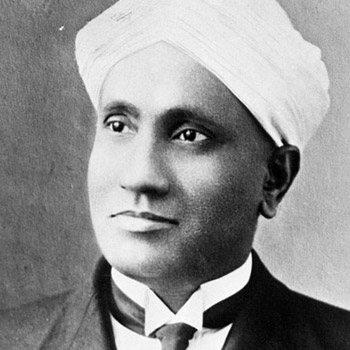
Rajguru
Shivaram Hari Rajguru was born on 24 August 1908 in the village of Khed (now renamed Rajgurunagar in his honor) near Pune, Maharashtra, he hailed from a Deshastha Brahmin family. His father, Harinarayan Rajguru, passed away when Shivaram was just six years old, leaving the family’s responsibilities to his elder brother, Dinkar.
Rajguru’s early education began in his hometown, followed by studies at the New English High School in Pune. Despite financial constraints, he was a bright student with a keen interest in history and politics. Inspired by nationalist leaders like Lokmanya Tilak, Rajguru joined the Seva Dal, a grassroots organization that trained young Indians in patriotic service.
Entry into Revolutionary Politics
Rajguru’s transformation from a student to a revolutionary was catalyzed by the brutalities of British colonial rule. He joined the Hindustan Socialist Republican Association (HSRA), a radical group committed to armed resistance against British imperialism. Unlike Mahatma Gandhi’s non-violent approach, Rajguru believed in militant nationalism, asserting that oppression must be met with force. His exceptional marksmanship earned him the nickname “Gunman” within the HSRA, and he operated under the alias Raghunath. Rajguru’s ideological commitment was so intense that he once deliberately touched a hot iron to test his pain threshold in preparation for potential torture.
The Saunders Assassination: A Defiant Act of Justice
The turning point in Rajguru’s revolutionary career came in December 1928, when the British police brutally lathi-charged protestors opposing the Simon Commission, fatally injuring veteran leader Lala Lajpat Rai. In retaliation, Rajguru, along with Bhagat Singh and Sukhdev Thapar, plotted the assassination of J.P. Saunders, a British police officer involved in the attack.
On 17 December 1928, the trio executed their plan in Lahore, killing Saunders in a swift and calculated operation. This act was not just revenge—it was a symbolic strike against colonial tyranny, intended to awaken the masses and shake the foundations of British rule.
Arrest, Trial, and Martyrdom
After the assassination, Rajguru went into hiding in Nagpur, where he briefly stayed with an RSS worker and even met Dr. K.B. Hedgewar, the founder of the Rashtriya Swayamsevak Sangh. However, he was eventually arrested and tried alongside Bhagat Singh and Sukhdev. Despite international appeals for clemency, the British government sentenced all three to death. On 23 March 1931, at the young age of 22, Shivaram Rajguru was executed by hanging in Lahore Central Jail. Their bodies were secretly cremated on the banks of the River Sutlej, but their legacy was immortalized in the hearts of millions.
Legacy and Remembrance
- Rajgurunagar, formerly Khed, was renamed in his honor.
- His ancestral home, Rajguru Wada, has been preserved as a memorial and is maintained by the Hutatma Rajguru Smarak Samiti.
- In 2013, India issued a commemorative postal stamp celebrating his contribution.
- Every year, 23 March is observed as Shaheed Diwas, honoring Rajguru, Bhagat Singh, and Sukhdev as martyrs of the nation.
Rajguru’s Enduring Relevance
Shivaram Rajguru’s life is a testament to the power of conviction and the courage to challenge injustice. His story resonates with young Indians who seek change, reminding us that freedom is not given—it is earned through sacrifice, vision, and unyielding resolve.