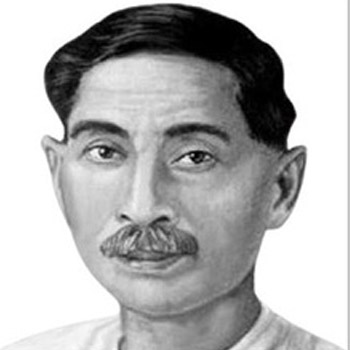
Masterda Surya Sen
Surya Sen, affectionately known as Masterda, was a visionary revolutionary and teacher whose courageous actions became a turning point in India’s fight for independence from British rule. His legacy is inseparable from the legendary Chittagong Armoury Raid, an event that still resonates as a beacon of patriotism and resistance.
Early Life and Ideological Formation
Surya Sen was born on 22 March 1894 in Noapara, Chittagong, which is presently in Bangladesh. Raised by his father Ramaniranjan Sen, a school teacher, he grew up valuing education, discipline, and self-respect. During his college years at Berhampore College (now Krishnath College), Sen became enamored with nationalism, inspired by mentors and revolutionary works. In 1916, under the influence of his teacher Shatishchandra Chakrabarti, he joined Anushilan Samiti, an organization that sought to evict the British through revolutionary means.
The Revolutionary Path
After graduating, Surya Sen returned to Chittagong in 1918 and started teaching mathematics at the National School. His dedication, persuasive skills, and ideological clarity quickly made him popular, earning him the moniker Masterda (a term of respect for a teacher in Bengal). While involved with the Indian National Congress and Gandhi’s Non-Cooperation Movement, Sen became disillusioned with the withdrawal of mass action and shifted to direct revolutionary activities.
Sen led the formation of a strong and secretive revolutionary group in Chittagong, involving youth from different backgrounds and spreading anti-colonial sentiments.
The Chittagong Armoury Raid
The pinnacle of Surya Sen's leadership was evident on 18 April 1930, when he masterminded the daring Chittagong Armoury Raid. Alongside revolutionaries like Ganesh Ghosh and Pritilata Wadedar, Sen orchestrated an attack on two British police armouries, aimed at seizing weapons and crippling government communication lines. Although they succeeded in capturing the arms - though not the ammunition - they cut telegraph and railway lines, briefly declared Chittagong independent, and inspired local youth with a call to join the struggle.
The British response was brutal and swift. Many revolutionaries were killed or arrested, but Masterda managed to evade capture for three years, continuing his efforts with undiminished zeal.
Final Days, Execution, and Legacy
Surya Sen believed deeply in humanism, often saying, “Humanism is a special virtue of a revolutionary”. However, his revolutionary years were marked by hardship, constantly moving, organizing radical actions such as the attempted destruction of Chittagong jail and an attack on the European Club by Pritilata Wadedar.
After betrayal by a local villager, Sen was captured in February 1933 and subjected to severe torture in custody. On 12 January 1934, he was executed by the British - an act that remains one of the most poignant moments in Indian freedom history.
His final words echoed his undying spirit: “Only one thing, that is my dream, a golden dream - the dream of Free India...”.
Impact and Remembrance
The Chittagong Uprising led by Surya Sen inspired generations of freedom fighters across India. His organizational genius, unwavering patriotism, and sacrifice turned him into a legendary figure not only in Bengal, but throughout the subcontinent. Many schools, institutions, and locations in both India and Bangladesh are named in his honor, and his legacy continues to be celebrated by those committed to justice and freedom.
Surya Sen, Masterda, remains a symbol of fearless resistance, inspiring millions with his life of sacrifice and his dream of a liberated India.