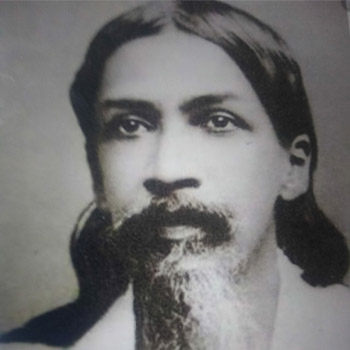
Deshbandhu Chitta Ranjan Das
Deshbandhu Chittaranjan Das stands out not merely as a freedom fighter, but as a man of deep conviction, unmatched oratory, and profound compassion. Revered as Deshbandhu or Friend of the Nation, Das played a pivotal role in shaping the early course of India’s nationalist movement. A lawyer, poet, political leader, and philanthropist, he was a beacon of progressive thought and a staunch advocate for Hindu-Muslim unity and the upliftment of the marginalized.
Early Life and Education
Chittaranjan Das was born on November 5, 1870, into a distinguished Bengali Kayastha family in Calcutta (now Kolkata). His family was steeped in the Brahmo Samaj tradition, a reformist religious movement that emphasized monotheism, social reform, and rational thinking. His father, Bhuban Mohan Das, was a noted solicitor and journalist, and the environment in which young Chittaranjan grew up was intellectually stimulating and socially conscious.
Das was educated at the Presidency College in Calcutta and later went to England to study law. While in England, he became associated with Indian nationalists in London, including those influenced by Dadabhai Naoroji and Bal Gangadhar Tilak. In 1894, he was called to the Bar at the Middle Temple, returning to India soon after to practice law.
Legal Career and Rise to Prominence
Das quickly established himself as a brilliant barrister in the Calcutta High Court. His legal acumen was matched by his eloquence and ethical rigor. The defining moment of his legal career came in 1908, when he successfully defended Sri Aurobindo Ghose in the Alipore Bomb Case, one of the most sensational political trials of the time. This case catapulted him to national fame and cemented his reputation as a champion of justice and civil liberties.
Entry into Politics
Though deeply patriotic from his student days, Das’s active political involvement began in earnest in the second decade of the 20th century, during the Non-Cooperation Movement launched by Mahatma Gandhi in 1920. However, his political ideology, while aligned with the cause of Indian independence, was distinct in several ways.
Das believed that Swaraj (self-rule) could not be achieved merely through passive resistance. He advocated for the constructive participation of Indians in governance, including the legislative councils, a position that put him at odds with Gandhi’s call for total non-cooperation.
Formation of the Swaraj Party
The ideological rift with Gandhi over the withdrawal of the Non-Cooperation Movement in 1922 led Das, along with Motilal Nehru, to form the Swaraj Party in 1923. The party’s objective was to enter the colonial legislative councils and disrupt their functioning from within, exposing British misrule and advocating for Indian rights.
The Swarajists, as they were known, performed remarkably well in the 1923 elections and became a formidable force within the councils. Das was elected to the Central Legislative Assembly and used the platform to articulate nationalist demands with fearless eloquence.
Vision of a Secular and Inclusive India
One of Das’s most enduring legacies was his commitment to Hindu-Muslim unity. At a time when communal divisions were being exacerbated by colonial policies and internal tensions, Das stood firm on the idea of a secular, inclusive nationalism.
His efforts to reach a political understanding with the Khilafat leaders and other Muslim political figures were bold and ahead of their time. He recognized that without communal harmony, India’s dream of independence would remain fractured and fragile.
Champion of Social Reform and Equality
Chittaranjan Das was also a social reformer. He believed that political freedom must be accompanied by social justice. He championed the cause of women’s education, workers’ rights, and the abolition of untouchability. His own household was a model of progressive values - his wife, Basanti Devi, was an active participant in the freedom struggle, and his children were raised in an atmosphere of liberal thought and public service.
He was also a patron of arts and culture, encouraging Bengali literature and theatre. His own writings, poems and essays, reflected a deep sense of patriotism and humanism.
Final Years and Death
Chittaranjan Das’s relentless work and political exertions took a toll on his health. He retreated to Darjeeling in 1925 for recuperation but passed away on June 16, 1925, at the young age of 55. His death sent shockwaves across the country. Rabindranath Tagore, Subhas Chandra Bose, Gandhi, Nehru, and many other leaders paid tribute to his moral courage and statesmanship.
Legacy and Remembrance
Das’s legacy is woven into the very fabric of modern Indian nationalism:
- Deshbandhu Park and Deshbandhu College in Kolkata are named in his honor.
- His protégé, Subhas Chandra Bose, considered him a political mentor and was inspired by his bold, uncompromising nationalism.
- His vision of an India based on equity, secularism, and participatory democracy remains relevant today.
While his political strategies sometimes diverged from Gandhi’s, both men deeply respected each other, and Das’s contributions were critical in shaping the pluralistic, federal vision of India.
Conclusion
Chittaranjan Das was not just a lawyer or a politician, he was a moral force, a visionary, and a true servant of the people. In the shadows of colonial oppression, he emerged as a torchbearer of conscience and justice. His life reminds us that leadership requires not just courage, but compassion; not just ideology, but inclusivity.
In remembering Deshbandhu, we remember a man who refused to be silent in the face of injustice, who bridged divides, and who lived—and died—for the dream of a free, fair, and united India.