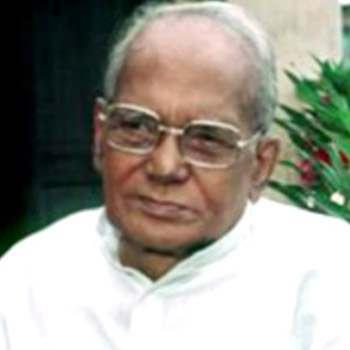
Bal Gangadhar Tilak
Keshav Gangadhar Tilak, popularly known as Lokmanya Tilak or Bal Gangadhar Tilak, was born on July 23, 1856, at Ratnagiri, Maharashtra. He has been called as the 'Maker of Modern India' by Mahatma Gandhi, for demonstrating supreme courage, sacrifice, selflessness and for his historic role in the early phase of the independence movement.
In 1881, Tilak, along with Gopal Ganesh Agarkar, founded the newspapers 'Kesari' (in Marathi) and 'Mahratta' in English, and used them to Lokmanya Tilak spread nationalist resistance against British rule. He officially opposed the Age of Consent Bill (which became an act in 1891) which sought to increase the age of consent from ten to twelve for young girls.
In 1893, he started the new tradition of worshipping Ganpati as a community festival where patriotic songs would be sung and nationalist ideas would be propagated. To further the cause of nationalist resistance, Tilak started the Shivaji festival in 1896. The aim was to inspire nationalist ideas among young Maharashtrians. That same year, he organised a campaign in Maharashtra to boycott foreign cloth to protest the imposition of an excise duty on cotton.
He has also authored several books such as Geeta Rahasya, Orion, The Arctic Home in the Vedas, etc. Lokmanya Tilak was tried for seditions thrice and was imprisoned twice.
In 1897, he was charged with sedition for "exciting and attempting to excite feelings of disaffection to Government by the publication of certain articles in Kesari. He was sentenced to 18 months imprisonment. He was represented by DD Davar, who later, as a judge, gave him six-years imprisonment sentence in his second sedition case.
While defending the action of Prafulla Chaki and Khudiram Bose in Muzaffarpur Bomb case (1908) in Kesari, Lokmanya Tilak gave call for Swarajya or Self-rule. He was immediately arrested on charges of sedition and sentenced to six years imprisonment in Mandalay, Burma (present day Myanmar). He was represented by Muhammad Ali Jinnah. During his imprisonment in Mandalay, he wrote Geeta Rahasya.
In 1916, Lokmanya Tilak was acquitted in sedition case for giving lectures on Swarajya or Self-rule. The 'Lal-Bal-Pal' troika consisted of Lokmanya Tilak and other extremist leaders of the Indian National Congress - Bipin Chandra Pal and Lala Lajpat Rai. They advocated pursuit of unconstitutional means to attain the goal of Swarajya. The difference between extremist leaders and moderates led to the split in the Indian National Congress during its annual session in Surat in 1907 (famously known as the Surat Split).
Tilak was released from a six-year prison term in Mandalay in 1914, and plunged back into political life. He rejoined the Indian National Congress during its famous Lucknow session in 1916. The Lucknow Pact (1916) brought the Indian National Congress and the Muslim League together to demand constitutional reforms and self-rule.
Lokmanya Tilak also founded the All-India Home Rule League with GS Khaparde and Annie Besant. He started his Home Rule League in Maharashtra (excluding Bombay City), Karnataka, Berar and Central Provinces. His Home Rule League mobilized 14,000 people by 2017.
He passed away on 1st August, 1920 in Bombay (present day Mumbai), a day before Gandhiji launched the Non-Cooperation Movement. On the first anniversary of his death, the Tilak Swaraj Fund was announced by Mahatma Gandhi in 1921 to raise Rs. 1 crore to support the Non-cooperation Movement and reinforce the resistance against British rule, reflecting Tilak's enduring influence on the freedom struggle.
The famous words in Marathi which translates to 'Swaraj is my birthright and I shall have it' has been attributed to one of his speeches held in Belgaum, Karnataka in 1916, originally penned by his associate Joseph 'Kaka' Baptista. The Britishers called him 'The Father of Indian Unrest', a title first given by Sir Valentine Chirol in his book 'Indian Unrest', which had led to a long court case of defamation and libel against the author Chirol.