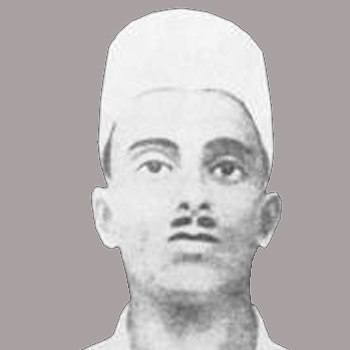
Anand Mohan Bose
Anand Mohan Bose (23 September 1847 - 20 August 1906) was a distinguished Indian politician, academic, social reformer, and lawyer during the British colonial period, widely recognized as a key figure in the early nationalist movement and the Bengal Renaissance.
Born in the village of Joysiddhi in the Kishoreganj district (now in Bangladesh), Bose hailed from a landed family. Demonstrating extraordinary academic brilliance from an early age, he topped his entrance exams at Mymensingh Zila School in 1862 and secured first position both in his F.A. and B.A. examinations at Presidency College, Calcutta. His stellar academic record earned him the prestigious Premchand Roychand Studentship, enabling him to pursue higher studies in England.
At the University of Cambridge, Bose studied mathematics and became the first Indian to achieve Wrangler status by earning first-class honors in the Mathematical Tripos in 1874. Simultaneously, he trained as a barrister and was called to the Bar the same year. He returned to India and joined the Calcutta High Court as a practicing lawyer.
Bose was an ardent social reformer and deeply involved in the Brahmo Samaj - a progressive religious movement advocating for social and religious reform. He adopted Brahmoism with his wife in 1869 and later, after a schism in the Brahmo Samaj in 1878, led a dissident faction to establish the Sadharan Brahmo Samaj. He was elected its first president and served for thirteen years, instituting democratic management and founding several Brahmo institutions. He introduced innovative educational methods such as moral instruction for Brahmo students aimed at holistic development.
In addition to his religious and social reform activities, Bose made seminal contributions to Indian nationalism. Inspired by his mentor Surendranath Banerjea, whom he met in London, Bose co-founded the Indian National Association in 1876. This organization is regarded as one of the earliest attempts to organize constitutional agitation against British colonial rule, and it set the foundation for the Indian National Congress established in 1885. Bose was a founding leader of the Congress and was elected president of its 14th session held in Madras in 1898.
Bose passionately advocated for education reform, especially female education. He established the Banga Mahila Vidyalaya in 1876 and later merged it with the Bethune School to strengthen the cause. In 1879, he founded the City College in Calcutta, an institution that later bore his name and continues to function today. His educational initiatives sought to uplift the underprivileged and eradicate illiteracy. Bose also promoted large-scale technical education and industrialization, envisioning progress for India through modernization.
Politically, Bose emphasized the role of students as a vital force in social and political progress. To this end, he founded the Calcutta Students Association in 1875 and served as its first president. His leadership combined social, educational, religious, and political reforms within a broad framework of constitutional nationalism.
Anand Mohan Bose passed away on 20 August 1906 in Calcutta, leaving a legacy of pioneering contributions to Indian nationalism, social reform, and education. His vision and work during the formative years of India’s freedom struggle and reformist movements resonate as essential pillars of modern India’s history.