Indian States and Union Territory - Sikkim
Chief Minister: Shri Prem Singh Tamang (Golay)
Governor/Administrator: Shri Om Prakash Mathur
Area: 7,096 sq. km sq. km
Capital: Gangtok
Population: 6,07,688
Male Population: 87
Female Population: 76
Total Literacy(%): 82.20
Male Literacy(%): 87.29
Female Literacy(%): 76.43
Sex Ratio: 889
No of District: 4
Principal Languages: Nepali
Other Languages: Lepcha, Bhutia, Limbu and Nepali 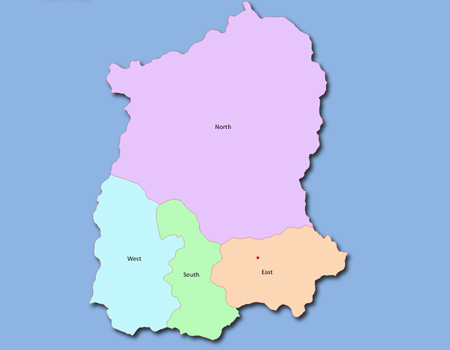
Sikkim is a unique and beautiful state located in the northeastern part of India, nestled in the eastern Himalayas. It is renowned for its dramatic geography, rich history, organic agriculture, growing industries, abundant water resources, cultural festivals, and captivating tourist destinations. Here is a detailed article covering all those aspects.
History and Geography
Sikkim, once a Himalayan kingdom, was known as 'Neliang' by the Lepchas and 'Lho'mon' by the Bhotias, who were among its earliest settlers. It was an independent monarchy until it became the 22nd state of India in 1975. Geographically, Sikkim is a small mountain state covering about 7,096 square kilometers, bordered by Tibet to the north, Nepal to the west, Bhutan to the east, and West Bengal to the south. The state is surrounded by the Himalayan mountains on three sides and features extreme relief; the land rises sharply from around 750 feet in the Tista River valley up to Kanchenjunga, the world’s third-highest peak at nearly 28,200 feet. The state's terrain includes fertile river valleys, densely forested areas, and the Lower Himalayas, which are the most densely populated region.
Agriculture
Agriculture is the main occupation in Sikkim, and the state is celebrated for its organic farming practices. In August 2019, Sikkim was declared the world's first 100% organic state by the United Nations Food and Agriculture Organization (FAO). The climate and fertile land support a variety of crops, including rice, maize, wheat, barley, millet, and potatoes. Sikkim is particularly famous for producing large cardamom, contributing over 80% of India's total production. Other important agricultural products include tea, buckwheat, soybeans, peas, mustard, and various horticultural crops.
Industry
Sikkim's economy is supported by a range of industries, with tourism, agriculture, and floriculture being the main sectors. Hydroelectric power generation is also significant. The government promotes various industrial initiatives, including pharmaceutical production, food processing, and eco-tourism infrastructure like hotels, breweries, and handicrafts. The state also has industry clusters focusing on tea production and organic agro-processing. Other emerging industrial sectors include electronics and security ink manufacturing.
Irrigation and Power
The Water Resources & River Development Department handles irrigation and water management, crucial for Sikkim’s agrarian economy. It focuses on constructing irrigation channels and managing natural water resources efficiently, including perennial water sources for sustained agricultural use. The department also undertakes flood control, river training, storm water drainage, and anti-erosion work to protect public property and infrastructure. Hydroelectric power is a major source of energy, harnessed by utilizing the abundant snow-fed streams and rivers like the Teesta and Rangeet that flow through the state.
Transport
Transportation in Sikkim primarily utilizes roadways and airways. There is no direct railway service; the nearest railhead is New Jalpaiguri in West Bengal, about 125 km from Gangtok, the state capital. Sikkim is connected by air through small airports, and roadways are the dominant means of intra-state and inter-state travel. The state's rugged terrain is navigated by taxis and buses, which are the preferred modes of transport for residents and tourists alike. The road network connects towns and tourist destinations, supporting comfortable and frequent travel despite the challenging mountainous landscape.
Festivals
Sikkim is culturally diverse, with several ethnic groups like the Lepchas, Bhutias, and Nepalis celebrating their unique traditions. Major festivals include Losar (Tibetan New Year), Bumchu (a sacred water festival), Saga Dawa (celebrating Lord Buddha), and the vibrant, colorful festival of Maghe Sankranti. These festivals are characterized by traditional music, dance, elaborate rituals, and community feasts, reflecting the rich spiritual and cultural heritage of the state.
Tourist Centres
Sikkim is a famous tourist destination known for its stunning natural beauty and tranquility. Popular sites include:
- Gangtok: The capital city with viewpoints, monasteries, and markets.
- Tsongmo Lake: A beautiful glacial lake surrounded by mountains.
- Yumthang Valley: Known as the "Valley of Flowers."
- Nathula Pass: A high mountain pass on the Indo-China border.
- Pemayangtse Monastery: One of the oldest and most prestigious monasteries.
- Kanchenjunga National Park: A UNESCO World Heritage Site with rich biodiversity.
These tourist centers offer a mix of adventure, spirituality, and nature exploration, drawing visitors throughout the year.
In conclusion, Sikkim is a Himalayan jewel balancing tradition and modernity through its organic agriculture, sustainable industries, well-managed natural resources, cultural richness, and scenic tourism spots. Its unique geography and history add to its distinct identity within India.