Indian States and Union Territory - Lakshwadeep
Administrator: Shri Praful Patel (Administrator)
Area: 32 sq. km sq. km
Capital: Kavaratti
Population: 64,429
Male Population: 96
Female Population: 88
Total Literacy(%): 92.28
Male Literacy(%): 96.11
Female Literacy(%): 88.25
Sex Ratio: 946
No of District: 1
Principal Languages: Jeseri (Dweep Bhasha) and Mahal
Other Languages: Jeseri (Dweep Bhasha) and Mahal 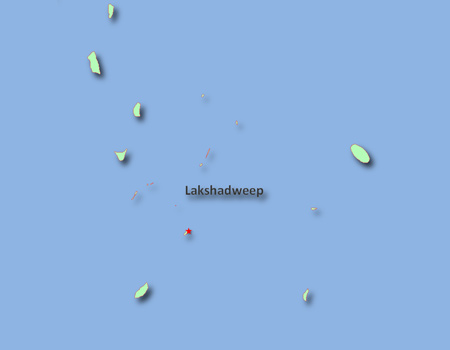
Lakshadweep, India's smallest union territory, is a group of islands in the Arabian Sea, known for its pristine beaches and coral reefs. This article explores its history, geography, economy, culture, and attractions.
History and Geography
Lakshadweep's history is marked by its strategic location along ancient maritime trade routes, with influences from Arab traders and later European colonial powers. The islands were administered by the British as part of the Madras Presidency before becoming a union territory of India in 1956. Geographically, Lakshadweep consists of 36 coral islands, with only 10 inhabited, spread over an area of about 32 square kilometers. The islands feature sandy beaches, lagoons, and coral reefs, with a tropical climate and limited freshwater resources.
Agriculture
Agriculture in Lakshadweep is limited due to the small land area and poor soil quality. However, coconut cultivation is the primary agricultural activity, with coconuts being a significant source of income for the local population. Other crops include breadfruit, banana, and various vegetables grown in small kitchen gardens. Fishing is also a vital part of the local economy, providing sustenance and employment to many islanders.
Industry
The economy of Lakshadweep is primarily based on fishing, coconut processing, and tourism. The islands are known for their rich marine biodiversity, making fishing a crucial industry. Coconut products such as copra, coir, and coconut oil are significant exports. Tourism has been growing steadily, with visitors attracted to the islands' natural beauty, water sports, and eco-tourism opportunities. Handicrafts made from coconut shells and coir also contribute to the local economy.
Irrigation and Power
Irrigation in Lakshadweep is minimal due to the limited land area and freshwater resources. Rainwater harvesting is commonly practiced to meet agricultural and domestic water needs. Power generation on the islands relies on diesel generators, with efforts underway to explore renewable energy sources such as solar and wind power to reduce dependence on fossil fuels and promote sustainability.
Transport
Transport to and within Lakshadweep is primarily by sea and air. The islands are connected to the Indian mainland through regular ship services from Kochi and other ports. The Agatti Aerodrome provides air connectivity, with flights from Kochi. Within the islands, transport is mainly by boats and small vehicles, as road infrastructure is limited due to the small size of the islands.
Festivals
Lakshadweep celebrates several festivals that reflect its cultural heritage and Islamic traditions. Key festivals include:
- Eid-ul-Fitr and Eid-ul-Adha: Major Islamic festivals celebrated with communal prayers, feasts, and charity.
- Mawlid al-Nabi: The birthday of Prophet Muhammad, observed with religious gatherings and recitations.
- Local festivals: Various island-specific festivals celebrating the sea, fishing, and community life.
Tourist Centres
Lakshadweep offers several tourist attractions, including:
- Kavaratti: The capital island known for its beautiful lagoons, coral reefs, and water sports.
- Agatti: Famous for its pristine beaches and the Agatti Aerodrome.
- Bangaram: A popular destination for eco-tourism and water activities like snorkeling and scuba diving.
- Minicoy: Known for its unique culture, lighthouse, and traditional boats called 'Dhoni.'
In conclusion, Lakshadweep is a unique union territory with a rich cultural heritage and stunning natural beauty. Its economy relies on fishing, coconut cultivation, and tourism, while its festivals and tourist centers offer visitors a glimpse into island life in the Arabian Sea.