Indian States and Union Territory - Jharkhand
Chief Minister: Mr. Hemant Soren
Governor: Shri Santosh Kumar Gangwar
Area: 79,714 sq. km
Capital: Ranchi
Population: 3,29,66,238
Male Population: 78
Female Population: 56
Total Literacy(%): 67.63
Male Literacy(%): 78.45
Female Literacy(%): 56.21
Sex Ratio: 947
No of District: 22
Principal Languages: Hindi
Other Languages: Hindi 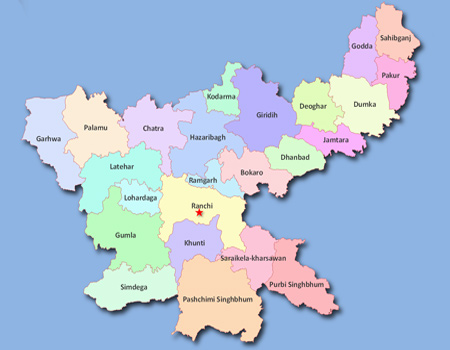
Jharkhand is a vibrant and resource-rich state located in eastern India, characterized by its distinct history, geography, robust agricultural and industrial sectors, evolving infrastructure, cultural festivals, and notable tourist centers.
History and Geography
Jharkhand was formed on November 15, 2000, carved out of the southern part of Bihar to address the unique cultural and economic aspirations of the indigenous tribal population. The state encompasses an area of about 79,716 square kilometers, predominantly covered by the Chota Nagpur Plateau. This plateau, with an average elevation of around 2,000 feet, stretches across the state and is distinguished by its hills, valleys, and rich mineral resources. Major rivers flowing through Jharkhand include the Damodar, North and South Koel, Barakar, Sankh, and Subarnarekha, which contribute to the water system sustaining agriculture and industry. Forests cover large portions of the state, providing habitats for elephants and tigers, underscoring its ecological importance.
Agriculture
Agriculture in Jharkhand is predominantly rain-fed, with around 92% of cultivated land relying on monsoon rains due to limited irrigation infrastructure. Paddy is the dominant crop, grown largely in small and marginal holdings. The agricultural economy is characterized by low productivity and monocropping, constrained by low investment and inadequate irrigation. Despite these challenges, Jharkhand's soil is young and rich in humus, offering good potential for horticulture and forest produce expansion. The state is also exploring modern irrigation techniques, including solar-powered surface water irrigation to improve water usage and empower local farmers sustainably.
Industry
Jharkhand is one of India's key industrial hubs, endowed with vast mineral wealth, including coal and iron ore. The state's economy significantly benefits from mining, steel production, engineering, chemicals, handloom, automobile manufacturing, and cement industries. Major industrial towns like Jamshedpur (home to Tata Steel and Tata Motors), Bokaro (Bokaro Steel Plant), Dhanbad (coal capital), and Ranchi drive the state's economic growth. These industries, powered by the state's mineral resources, employ a large workforce and contribute notably to both state and national GDP.
Irrigation and Power
The state's irrigation infrastructure remains underdeveloped, causing heavy dependency on rainfall for agriculture. However, Jharkhand has significant power generation capacity totaling approximately 2,590 MW from thermal and hydel sources, including the Tenughat and Patratu Thermal Power Stations, the Sikkidiri Hydel Project, and power projects under the Damodar Valley Corporation. Plans for expanding power capacity by over 4,700 MW are underway, incorporating both thermal and hydel sources to meet growing industrial and domestic demands.
Transport
Jharkhand's transport infrastructure is steadily improving, comprising roadways, railways, and public transport services designed to connect remote tribal areas and urban centers. Bus services operate frequently, especially along national highways, while smaller vehicles like auto rickshaws, taxis, trekkers, and mini-buses serve district headquarters and nearby regions. The state's transport department focuses on promoting road infrastructure and safety while accommodating the population's mobility needs.
Festivals
Jharkhand boasts a rich cultural tapestry, with numerous fairs and festivals celebrated enthusiastically, reflecting the traditions of its tribal communities and other groups. Major festivals include Sarhul, a spring festival dedicated to nature worship; Karma, celebrating community and harvest; Sohrai, a cattle festival; and the festival of Tusu, celebrated by women. These festivals not only highlight Jharkhand's vibrant tribal heritage but also promote social cohesion and cultural pride.
Tourist Centres
Jharkhand offers diverse tourist attractions ranging from natural beauty to historical sites. Key destinations include:
- Ranchi, the state capital, is known for scenic spots like Hundru Falls, Jonha Falls, and Rock Garden.
- Netarhat, famed for its sunrise and sunset views amid hills.
- Betla National Park, rich in wildlife including tigers and elephants.
- Hazaribagh National Park, a sanctuary for various flora and fauna.
- Parasnath Hill, an important Jain pilgrimage site.
These centers showcase Jharkhand's wildlife, cultural heritage, and picturesque landscapes.
Jharkhand stands out as an Indian state where ancient cultural roots and natural resources blend with modern industry and development, promising dynamic future growth while preserving its unique identity.