Indian States and Union Territory - Andhra Pradesh
Chief Minister: Shri Chandrababu Naidu
Governor: Shri Justice (Retd.) S. Abdul Nazeer
Area: 1,60,205 Sq Km
Capital: Amravati
Population: 4,93,86,799
Male Population: 74
Female Population: 60
Total Literacy(%): 67.40
Male Literacy(%): 74.80
Female Literacy(%): 60.00
Sex Ratio: 992
No of District: 26
Principal Languages: Telugu
Other Languages: Telugu and Urdu 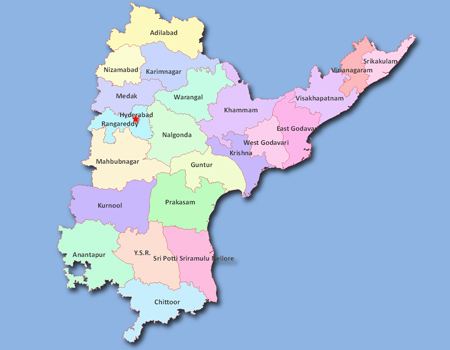
Andhra Pradesh stands as a significant state in southeastern India, renowned for its rich history, diverse geography, robust agricultural sector, thriving industry, evolving irrigation and power infrastructure, efficient transport systems, vibrant festivals, and attractive tourist centres.
History and Geography
Andhra Pradesh's history traces back to ancient times, with references to the Andhras in the Aitareya Brahmana of the Rigveda (c. 800 - 500 BCE). The region flourished under the Satavahana dynasty, known for its role in consolidating kingdoms, promoting Buddhism, and supporting trade and the arts. Over the centuries, Andhra has witnessed various cultural shifts, resulting in the amalgamation of tribal, Buddhist, and Dravidian influences.
Geographically, Andhra Pradesh is India's seventh-largest state, covering 162,970 km², and boasts the nation's second-longest coastline along the Bay of Bengal at approximately 974 kilometers. The Eastern Ghats run parallel to the coast, separating the fertile coastal plains from the higher, arid peneplains in the interior. Major rivers, such as the Krishna, Godavari, Tungabhadra, and Penna, traverse the state, nourishing broad deltas that support intensive agriculture. Notable features include the Araku Valley, the Gandikota gorge, and extensive cave systems like Borra and Belum.
Agriculture
Agriculture forms the backbone of Andhra Pradesh's economy, employing over 60% of the population. The state is celebrated as the "Rice Bowl of India," with rice as its primary crop, grown extensively in the river deltas. Other key crops include jowar, bajra, maize, pulses, oilseeds, sugarcane, cotton, chili pepper, mangoes, and tobacco. Andhra Pradesh is a leading producer of eggs and shrimp, contributing over 30% to India's fish production and earning the title of "Egg Bowl of Asia".
The region faces challenges regarding groundwater dependency, with over 60% of cultivated land relying on it, making sustainable water management a critical priority in 2025. To address these issues, the state government actively supports modern technologies, soil health initiatives, digital farming, and major irrigation projects such as the Godavari River Basin and Nagarjuna Sagar Dam.
Industry
While agriculture anchors rural livelihoods, industry has seen rapid growth, particularly in sectors like mineral extraction (notably limestone, baryte, and granite), IT, pharmaceuticals, textiles, and food processing. Andhra Pradesh's coastline facilitates a robust seafood industry with major exports. The recently accelerated ₹14,962 crore transmission network project is a landmark move to supply reliable power for growing industries, enable renewable energy integration, and support sustainable economic expansion.
Irrigation and Power
Andhra Pradesh’s irrigation is networked around its major river systems, encompassing multi-purpose projects like the Nagarjuna Sagar and Godavari River Basin projects. These support not only agriculture but also hydroelectric power generation. In energy, the state is investing heavily in modernizing transmission and supporting solar and wind integration. By fast-tracking large-scale power infrastructure, Andhra Pradesh is poised to meet the increasing demands of households, industries, and its agricultural base.
Transport
The state boasts a comprehensive transport network. Major national highways and state roadways link Andhra with its neighbors and the rest of India, while key railway junctions ensure smooth movement of goods and passengers. The ports at Visakhapatnam, Kakinada, and Krishnapatnam play crucial roles in maritime trade. Air connectivity is expanding, with international airports in Visakhapatnam, Vijayawada, and Tirupati.
Festivals
Andhra Pradesh is celebrated for its vibrant festivals, reflecting its rich cultural tapestry. Prominent among them are Pongal (harvest festival), Ugadi (Telugu New Year), and Sankranti, marked by widespread traditional celebrations across regions. The state also hosts unique events such as the Lumbini Festival, which highlights Buddhist heritage, and the Rayalaseema Food & Dance Festival, a showcase of cuisine and performing arts.
Tourist Centres
Tourism in Andhra Pradesh is diverse. Pilgrimage centres like the ancient Venkateswara Temple in Tirumala and the Amaravati Stupa attract millions yearly. Nature and adventure enthusiasts visit Araku Valley, the Gandikota gorge, and the scenic beaches of Rushikonda, Mypadu, and Suryalanka. Cultural and historical attractions include the monuments of Amaravati, grand temples, lively crafts villages, and caves that tell the story of the state's deep past.
Andhra Pradesh's harmonious blend of history, geography, economic strength, and cultural vibrancy makes it a compelling region, both for residents and visitors alike.