Indian States and Union Territory - Andaman and Nicobar Islands
Chief Minister: NA
Administrator: Devendra Kumar Joshi (Lieutenant Governor)
Area: 8,249 sq. km sq. km
Capital: Port Blair
Population: 3,79,944
Male Population: 90
Female Population: 81
Total Literacy(%): 86.27
Male Literacy(%): 90.11
Female Literacy(%): 81.84
Sex Ratio: 878
No of District: 3
Principal Languages: Hindi, Nicobarese, Bengali, Tamil, Malayalam, Telugu
Other Languages: Hindi, Nicobarese, Bengali, Tamil, Malayalam, Telugu 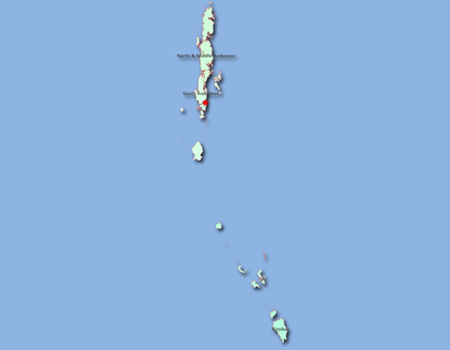
The Andaman and Nicobar Islands, a union territory of India, feature 836 islands with only 31 inhabited, located between 6° and 14° North Latitude and 92° and 94° East Longitude in the Bay of Bengal. This archipelago boasts a diverse terrain of sandstone, limestone, and shale from the Cenozoic era, with rough hills, narrow valleys, and coral-fringed coasts forming safe harbors.
History and Geography
Indigenous Andamanese people trace back over 30,000 years, with archaeological evidence from 2,200 years ago and Chola naval use in the 11th century. British rule established a penal settlement in 1858, post-1857 revolt, known as "Kalapani," until India's independence integrated the islands as a union territory. Geographically, 70% of the terrain consists of Paleogene sedimentary rocks like sandstone and shale, with hills dominating over scarce flat valleys and a few perennial rivers.
Agriculture
Agriculture covers 487 square kilometers, primarily rain-fed, with rice as the main crop alongside legumes, vegetables, and fruits like oranges, mangoes, and pineapple in hilly areas. Coconut and arecanut dominate as cash crops in Nicobar, occupying over 80% of tribal farmland on Car-Nicobar, supplemented by banana, papaya, tapioca, and sweet potato under subsistence practices. The sector supports most households, with efforts in homestead farming and watershed development enhancing productivity.
Industry
The economy relies on tourism, fisheries (tuna, shrimp, crab exports), handicrafts (shell, wood products), and coconut plantations, with Port Blair as the commercial hub. Small-scale industries include coconut oil extraction, copra making, fish processing, cane/wooden furniture, fruit jams, banana chips, and stone crushing. Scope exists for rice flakes, red bricks, ready-made garments, and arecanut processing, particularly in Little Andaman.
Irrigation and Power
Irrigation depends on rain-fed systems, ponds (725 units), bore wells, pump sets (720), and micro-irrigation initiatives under schemes like RKVY, with a net irrigated area of 1,468 hectares in key districts. Power generation totals around 109 MW from 53 plants across 19 islands, mostly diesel (99 MW), hydro (5.25 MW), and solar PV (5 MW), serving 1.18 lakh consumers with 230 MU annual sales. Plans include a 100 MWp solar addition and replacing aged diesel sets for 24x7 supply.
Transport
Transport within the islands includes road, air, and sea connectivity. Road transport features 143 buses on 75 routes by State Transport Services, extended to 10 islands beyond Port Blair by the Motor Transport Department. Airways and seaways form core connectivity, with infrastructure improvements ongoing for remote areas. Shipping leverages the strategic port location at Port Blair.
Festivals
The Island Tourism Festival in December-January, lasting 10 days, highlights cultural dances, music, handicrafts, food stalls, adventure sports, and workshops across Port Blair and other islands. This government event showcases tribal heritage and island traditions, drawing tourists to experience authentic local life.
Tourist Centres
Key attractions include Havelock Island (Swaraj Dweep) for pristine beaches, Radhanagar Beach, and scuba diving. North Andaman offers Saddle Peak (the highest point), Kalipur Beach (turtle nesting), Ramnagar Beach, and Alfred Caves. Port Blair features Cellular Jail, Ross Island, and Corbyn's Cove, alongside ecotourism in rainforests and coral reefs.