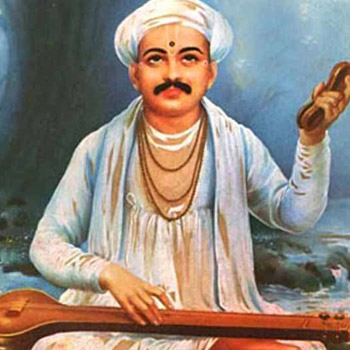
Swami Vivekananda
Swami Vivekananda (1863–1902) stands as one of the most influential spiritual figures of modern India whose thought combined ancient Vedantic wisdom with the demands of a rapidly modernizing world. A monk, philosopher, reformer, and social thinker, he became the torchbearer of Indian spirituality to the West and a key architect of the idea of a self-confident, culturally rooted, and socially progressive India. His teachings continue to inspire generations not only within India but across the globe.
Early Life and Influences
Born as Narendranath Datta on 12 January 1863 in Kolkata, Vivekananda came from a family steeped in both traditional values and modern ideas. His father, Vishwanath Datta, was a lawyer with a rational and liberal worldview, while his mother, Bhuvaneshwari Devi, shaped his character with religious devotion, discipline, and storytelling. As a youth, Narendranath was curious, logical, and fascinated by philosophy, music, and literature, displaying streaks of leadership and a questioning spirit.
His restless search for truth brought him to the holy feet of the mystic sage Ramakrishna Paramahamsa at Dakshineswar. Under Ramakrishna’s guidance, he plunged deep into the experience of spirituality and realized the practical essence of Vedanta, that divinity exists in every individual, and service to humanity is the highest worship.
Foundation of the Ramakrishna Mission
After the passing of Ramakrishna in 1886, Vivekananda took monastic vows and adopted a life of renunciation. Along with other disciples, he established the Ramakrishna Math, which became the center for spiritual practice and study. Later, in 1897, he founded the Ramakrishna Mission, dedicated to social service, education, health care, and humanitarian relief, an embodiment of his vision of “practical Vedanta,” where spirituality did not mean withdrawal from life but active service to society.
Address at the Parliament of Religions
Swami Vivekananda’s fame reached global heights when he represented Hinduism and India at the World’s Parliament of Religions held in Chicago in September 1893. His opening address, beginning with an invocation to the “Sisters and Brothers of America,” electrified the audience and gained him instant recognition. He spoke of religious tolerance, the universality of spiritual truth, and the richness of India’s spiritual traditions. Through his lectures across the United States and Europe, he challenged materialism, affirmed the value of spirituality, and projected Indian philosophy as a living, universal wisdom.
Philosophical Contributions
Vivekananda’s philosophy revolved around Advaita Vedanta, but he gave it a practical and humanistic interpretation. He emphasized:
- The divinity inherent in every human being.
- Service to the poor and downtrodden as service to God.
- Harmony of religions, affirming that all spiritual paths lead to the same ultimate truth.
- The ideal of strength, physical, mental, and spiritual as the foundation of individual and national progress.
For him, religion was not dogma but realization, not rituals but character-building, and not seclusion but dynamic engagement with life’s challenges.
Vision for National Regeneration
Vivekananda was not only a spiritual teacher but also a social reformer and patriot-saint. His concern for India’s plight under colonial rule was profound. He believed that true regeneration of India lay in reawakening self-confidence through spiritual revival, education, and service. He stressed the upliftment of the masses, especially empowering women, providing scientific and modern education alongside spiritual wisdom, and eradicating social evils. His famous call, “Arise, awake, and stop not till the goal is reached”, continues to echo as a clarion call for self-reliant action.
Literary Works and Legacy
Swami Vivekananda’s speeches and writings, compiled in The Complete Works of Swami Vivekananda, remain a treasure trove of thought. Texts such as Raja Yoga, Jnana Yoga, and Karma Yoga elaborate his interpretations of the different paths of spirituality. His letters reflect his vision for India’s development and reveal his warmth and compassion for disciples and fellow workers.
Though his life was brief—he passed away on 4 July 1902 at the age of 39, his impact was monumental. He inspired freedom fighters like Subhas Chandra Bose, Mahatma Gandhi, and Bal Gangadhar Tilak, gave spiritual grounding to social reformers, and influenced global thinkers with his ideals of harmony, service, and unity. Today, the Ramakrishna Mission carries forward his work across the world through schools, colleges, hospitals, and spiritual centers.
Conclusion
Swami Vivekananda was not merely a monk but a visionary who stood at the confluence of past and future, East and West, spirituality and modernity. For India, he rekindled pride in cultural heritage and confidence in nation-building. For the world, he offered a universal message of tolerance, strength, and inner awakening. He remains a guiding light whose words echo as much today as they did over a century ago, a reminder that true spirituality lies in realizing the divinity within and serving humanity with love.