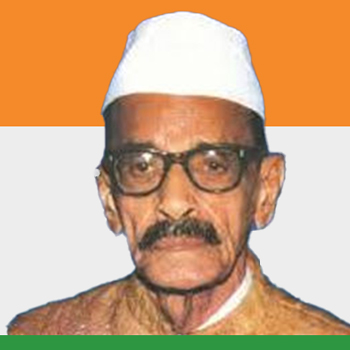
M S Swaminathan
A Life Devoted to Ending Hunger
Mankombu Sambasivan Swaminathan, better known to the world as M.S. Swaminathan, was one of the most consequential agricultural scientists of the twentieth century. Born on August 7, 1925, in Kumbakonam, Tamil Nadu, he grew up in a country scarred by recurring famines, including the devastating Bengal Famine of 1943 that claimed millions of lives. That catastrophe, which he witnessed as a young man, became the defining wound of his conscience and the driving force behind a lifetime of scientific work aimed at ensuring no Indian would ever again die of hunger. He passed away on September 28, 2023, at the age of 98, leaving behind an irreversible imprint on global food security.
Early Life and Education
Swaminathan came from an educated family. His father, M.K. Sambasivan, was a surgeon, and it was his influence that initially steered the young Swaminathan toward medicine. However, the Bengal Famine altered his trajectory entirely. Witnessing such monumental suffering convinced him that agriculture, not medicine, was the field where he could make the most meaningful difference. He pivoted decisively, earning a degree in zoology from Maharaja's College, Thiruvananthapuram, and then a diploma in agricultural science from Coimbatore Agricultural College. He went on to obtain his PhD in genetics from Wageningen University in the Netherlands, followed by postdoctoral research at the University of Wisconsin and the Cambridge Plant Breeding Institute in the United Kingdom.
By the time he returned to India in the early 1950s, Swaminathan was armed with world-class expertise in genetics and plant breeding, knowledge he was determined to put in the service of his starving nation.
The Green Revolution: Transforming Indian Agriculture
India in the late 1950s and early 1960s was teetering on the edge of a food catastrophe. The population was growing rapidly, crop yields were stagnant, and the country was heavily dependent on food aid, particularly American wheat under the PL 480 programme. Prime Minister Lal Bahadur Shastri's government faced the very real prospect of mass famine. Into this crisis stepped M.S. Swaminathan.
Working as the Director of the Indian Agricultural Research Institute (IARI) in New Delhi, Swaminathan initiated a landmark collaboration with the American agronomist Norman Borlaug, who had developed semi-dwarf, high-yielding, disease-resistant varieties of wheat in Mexico. Swaminathan recognized that adapting these varieties to Indian conditions and combining them with modern farming techniques, irrigation, fertilizers, and improved seeds could dramatically boost production.
His team conducted rigorous trials, and the results were extraordinary. Between 1965 and 1972, India's wheat production nearly doubled, rising from around 12 million tonnes to over 26 million tonnes. The Punjab and Haryana regions, which embraced the new varieties and methods most enthusiastically, became the grain bowls of India. The country, which had been begging for food aid, achieved self-sufficiency in food grains by the 1970s. This agricultural transformation came to be called the Green Revolution, and Swaminathan is rightly celebrated as its chief architect in India.
Beyond wheat, Swaminathan also contributed significantly to the improvement of rice varieties, working to develop strains suitable for tropical conditions. His work demonstrated that science, when applied with purpose and urgency, could be a powerful weapon against poverty.
The Concept of the Evergreen Revolution
While the Green Revolution brought undeniable benefits, Swaminathan was among the first to acknowledge its downsides and to propose a path beyond it. The intensive use of chemical fertilizers and pesticides, excessive groundwater extraction, and monoculture farming had begun to take a heavy ecological toll: soil degradation, water depletion, and loss of biodiversity.
Swaminathan articulated a forward-looking vision he called the "Evergreen Revolution", an approach that would achieve productivity increases not by sacrificing ecological health but by working with nature. He advocated for combining the best of modern genetic science with traditional ecological wisdom, integrating sustainable practices into mainstream farming. This meant promoting integrated pest management, organic inputs where feasible, crop diversification, watershed conservation, and community participation in agricultural decision-making.
He was insistent that food security and ecological security were not competing goals but complementary ones, that true food security could only be permanent if it was built on a foundation of environmental sustainability. This integrated philosophy, articulated decades before "sustainability" became a mainstream buzzword, revealed Swaminathan as not merely a scientist of his time but well ahead of it.
Championing Farmers and the Marginalized
Swaminathan's scientific achievements never caused him to lose sight of the farmer, particularly the small and marginal farmer, the tribal cultivator, and women in agriculture. He was acutely aware that the Green Revolution had largely bypassed rain-fed and dryland regions, creating a two-speed agricultural economy.
He founded the M.S. Swaminathan Research Foundation (MSSRF) in Chennai in 1988, an institution dedicated to sustainable development and the empowerment of rural and coastal communities. MSSRF became a model for development work that fused cutting-edge science with grassroots community engagement. One of its celebrated initiatives involved setting up village knowledge centres in remote areas, giving fishermen and farmers real-time access to weather forecasts, fish shoal locations, and market prices through internet kiosks, a genuinely transformative use of information technology for rural livelihoods.
Swaminathan also led the National Commission on Farmers (2004–2006), established by the Government of India at a time when farmer distress and suicides had become a national crisis. The Commission's reports, known as the Swaminathan Commission Reports, are among the most comprehensive and humane policy documents ever produced in India on agriculture. They called for land reforms, debt relief, improved access to credit, investment in irrigation, and a minimum support price equal to at least 50 per cent above the weighted average cost of production (C2 + 50%). This last recommendation, popularly encapsulated as "C2+50%," became a rallying demand of farmer unions across India for years afterward.
International Recognition and Global Contributions
The world recognized Swaminathan's contributions with some of its highest honours. He was awarded the Ramon Magsaysay Award in 1971, the Albert Einstein World Science Award in 1986, and, most significantly, the first World Food Prize in 1987, an award he shared with Norman Borlaug and which is often described as the Nobel Prize of food and agriculture.
He was a member of the United Nations Environment Programme's governing council, served as Director General of the International Rice Research Institute (IRRI) in the Philippines, and led the International Union for the Conservation of Nature. TIME magazine listed him among the twenty most influential Asians of the twentieth century.
Despite these global honours, Swaminathan remained deeply rooted in India's rural reality, his scientific work always anchored in the simple, urgent question: how do we feed everyone?
Later Years: Climate, Nutrition, and a Lasting Legacy
In his later decades, Swaminathan turned his attention to the emerging threats of climate change and hidden hunger, the widespread deficiency of micronutrients (iron, zinc, vitamin A) even among populations that were technically food-sufficient in caloric terms. He advocated strongly for biofortification, the process of breeding crops with higher micronutrient content, and championed policies that promoted dietary diversity and access to nutritious food for all.
He was deeply troubled by the impact of rising sea levels and erratic monsoons on coastal and island farming communities, and called for immediate adaptation strategies to protect these vulnerable populations.
As a Member of Parliament (Rajya Sabha) from 2007 to 2013, nominated for his contributions to science, he used the legislative platform to persistently push for stronger agricultural investment and food security legislation. He played a significant role in shaping the National Food Security Act of 2013.
Conclusion: A Scientist of the People
M.S. Swaminathan's life embodied a rare combination: the intellectual rigour of a world-class scientist and the moral urgency of a man who never forgot that his work was ultimately about human beings. He spent seven decades asking how science could serve the hungry, the marginalized, and the overlooked — and he spent those same seven decades answering that question in laboratories, in paddy fields, in village meeting rooms, and in parliamentary chambers.
He did not merely participate in history. He changed it. Because of his work, hundreds of millions of people in India and across Asia ate when they might otherwise have starved. Because of his vision, the conversation about agriculture was expanded to include ecology, equity, women's empowerment, nutrition, and climate resilience.
India has had many great scientists. But M.S. Swaminathan was something rarer still, a scientist who made kindness and justice the very purpose of his science. In that, his legacy is truly eternal.