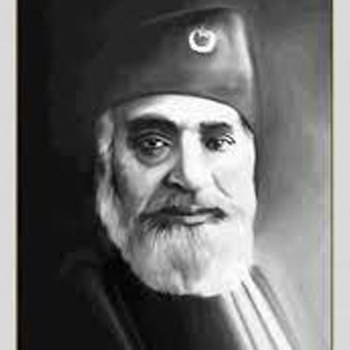
Lal Bahadur Shastri
When we think of India’s journey after independence, one name that often stands as a beacon of simplicity, courage, and moral leadership is Lal Bahadur Shastri. The second Prime Minister of India, Shastri was not a figure of flamboyance or grand rhetoric, but rather of quiet determination and unwavering integrity. Though his tenure was brief, his impact on India’s political, social, and moral fabric remains profound.
Early Life and Struggles
Lal Bahadur Shastri was born on October 2, 1904, in Mughalsarai (present-day Uttar Pradesh) into a modest family. His father was a school teacher who passed away when Shastri was very young, leaving the family in a state of hardship. Despite adversities, Shastri’s mother emphasized education and values.
What defined Shastri from a very early age was his resolve to live a life grounded in honesty and service. He walked miles to school, studied under dim light, and bore the brunt of poverty without losing his spirit of perseverance. Inspired by nationalist leaders like Mahatma Gandhi and Bal Gangadhar Tilak, Shastri grew up with a conviction to dedicate his life to India’s freedom struggle.
Role in the Freedom Movement
Shastri was deeply influenced by Gandhi’s principles of non-violence and truth. At the age of 17, he joined the Indian independence movement and became actively involved in Gandhiji’s campaigns, including the Non-Cooperation Movement of 1921. He also participated in the Salt Satyagraha (1930) and endured imprisonment multiple times, showcasing his resilience and commitment.
His simplicity was not just an outward demeanor but a way of life. Even while serving prison terms, he spent time studying works of philosophers, learning from Indian scriptures, and reflecting on ways to uplift the masses. By the time India achieved independence in 1947, Shastri had earned a reputation as a disciplined, principled, and selfless worker of the Congress Party.
Political Journey after Independence
After independence, Shastri took up significant roles in the government under the leadership of Jawaharlal Nehru. He was first appointed as the Parliamentary Secretary of Uttar Pradesh, where his administrative efficiency in handling issues of law and order gained attention.
Later, as the Railway Minister (1951–1956), Shastri demonstrated both accountability and humility. When a tragic rail accident occurred in 1956, he resigned, accepting moral responsibility even though he was not personally at fault. This was an extraordinary act of political ethics are rare even in today’s context, that elevated his stature in the nation’s eyes.
He also held other important portfolios like Home Affairs and Transport, where he worked quietly yet effectively, strengthening the fabric of governance.
Prime Ministership (1964–1966): A Short Yet Significant Era
Shastri became Prime Minister of India in June 1964, after the death of Jawaharlal Nehru. At first, many believed him to be a stopgap leader, lacking the charisma or political clout of his predecessor. However, Shastri soon dispelled doubts by leading with extraordinary strength and simplicity.
The White Revolution
Understanding the challenges of food scarcity and the growing needs of a young nation, Shastri strongly promoted milk production and dairy development. He encouraged the cooperative movement led by Verghese Kurien, which eventually blossomed into the world-famous Operation Flood and transformed India into one of the largest milk producers.
The Green Revolution
To tackle acute food shortages, Shastri gave a call for increased agricultural production through modern techniques, irrigation, and high-yield varieties of crops. His tenure laid the groundwork for the Green Revolution, which helped India move towards self-sufficiency in food grains.
The Indo-Pak War and the “Jai Jawan, Jai Kisan” Slogan
Shastri’s biggest test came during the Indo-Pak War of 1965. Despite economic difficulties and limited resources, he demonstrated firm leadership and moral courage, inspiring the armed forces and the common citizens alike. His iconic slogan, “Jai Jawan, Jai Kisan” (“Hail the Soldier, Hail the Farmer”), captured the spirit of national unity by linking the bravery of soldiers with the toil of farmers.
This phrase was not mere rhetoric but a call for collective strength, a recognition that a nation’s security and prosperity rested equally on the shoulders of its defenders and its food providers.
The Tashkent Agreement and Untimely Death
In January 1966, Shastri traveled to Tashkent (in present-day Uzbekistan) to sign a peace agreement with Pakistan under the mediation of the Soviet Union. While the Tashkent Agreement aimed to restore peace after the war, Shastri’s untimely death in Tashkent on January 11, 1966, shocked the entire nation.
His passing remains shrouded in mystery, with many still questioning the circumstances. Yet, his legacy was sealed as a leader who lived, and died for his nation, leaving behind no wealth or property, only principles and inspiration.
Legacy
Lal Bahadur Shastri’s contribution goes far beyond his short tenure:
- He symbolized the power of simplicity in politics.
- He proved that honesty and humility do not equate to weakness.
- He set examples of accountability in governance.
- He left behind an enduring slogan, “Jai Jawan, Jai Kisan”, which continues to resonate in India’s collective consciousness.
In a world dominated by leaders who often seek power for its own sake, Shastri exemplified what it means to serve selflessly. His life stands as a reminder that true leadership is measured not by wealth or popularity, but by the depth of integrity and the ability to inspire a nation.
Conclusion
Lal Bahadur Shastri’s life was one of modesty, courage, and quiet determination. He came from humble beginnings but rose to lead a nation with dignity and resolve. His tenure as Prime Minister, though brief, was filled with pathbreaking ideas and decisive actions that shaped India’s destiny. Even today, he is remembered as the gentle giant of Indian politics, a leader whose simplicity was his greatest strength and whose vision continues to guide India’s journey.