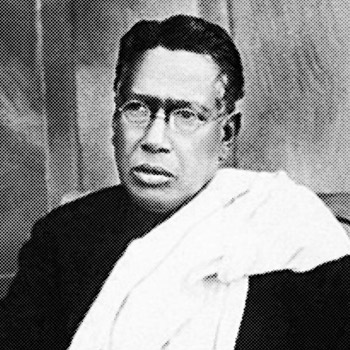
Dada Saheb Phalke Award 1969 to 2026
Dadasaheb Phalke Award is an annual award given by the Indian government for lifetime contribution to Indian cinema. It was instituted in 1969, the birth centenary year of Dadasaheb Phalke, considered the father of Indian cinema. The award for a particular year is given at the end of the following year along with the National Film Awards.
First Awardee was Devika Rani (1969).
1993 - Majrooh Sultanpuri
Majrooh Sultanpuri (Asrar ul Hassan Khan) was a legendary Indian Urdu poet and one of the most celebrated lyricists in Hindi cinema. Starting his career as a progressive Urdu poet, he transitioned into films with the 1946 film Shah Jehan, and over the next five decades, penned lyrics for countless timeless songs that blended poetic elegance with mass appeal. His work in classics like Dosti, Aradhana, Qayamat Se Qayamat Tak, and Padosan showcased his versatility across genres from soulful ballads to romantic melodies and philosophical musings. A prominent figure in the Progressive Writers’ Movement, Majrooh was deeply respected for his literary integrity and artistic depth. In 1993, he became the first lyricist to receive the prestigious Dadasaheb Phalke Award in 1993, recognizing his immense contribution to Indian cinema and literature. He passed away in 2000, leaving behind a rich legacy of poetry and music that continues to inspire generations.
1992 - Bhupen Hazarika
Bhupen Hazarika was a legendary Indian singer, composer, lyricist, poet, and filmmaker, widely regarded as one of the greatest cultural icons of Assam and a towering figure in Indian music and cinema. Known for his deep, resonant voice and socially conscious lyrics, he used music as a powerful tool to address themes of humanity, communal harmony, and social justice. His timeless songs in Assamese, Hindi, and Bengali, such as Bistirno Parore, Dil Hoom Hoom Kare, and Ganga Behti Ho Kyun, have touched millions across generations. A true polymath, Hazarika also made significant contributions to Assamese cinema and was deeply involved in cultural and political activism. He received numerous prestigious awards, including the Padma Bhushan, Padma Vibhushan (posthumously), Dadasaheb Phalke Award in 1992, and Bharat Ratna (posthumously) in 2029, cementing his legacy as a voice of the people and a beacon of Indian cultural identity. He passed away in 2011, leaving behind an enduring legacy of music, poetry, and social impact.
1991 - Bhalji Pendharkar
Bhalji Pendharkar was a pioneering filmmaker, screenwriter, and historian who made significant contributions to Marathi and Hindi cinema. Known for his passion for Indian history and culture, he specialized in directing historical and mythological films that instilled a sense of pride and nationalism, with notable works including Dharmatma, Bajiprabhu, and Mahatma Phule. A close associate of V. Shantaram, Pendharkar played a vital role in the early development of Indian cinema and was deeply committed to promoting traditional Indian values through his storytelling. Beyond filmmaking, he was also a respected film historian and writer who documented the evolution of Indian cinema. In recognition of his outstanding contribution, he was honored with the Dadasaheb Phalke Award in 1991. Bhalji Pendharkar remains a revered figure for his dedication to preserving and celebrating India's cultural heritage through the cinematic medium.
1990 - A Nageshwar Rao
Akkineni Nageswara Rao, popularly known as ANR, was a legendary actor and producer who played a pivotal role in shaping Telugu cinema. He rose from humble beginnings to become one of the most celebrated and respected actors in Indian film history, known for his versatility, natural acting style, and commitment to his craft. Over a career spanning more than seven decades, ANR starred in over 250 films, excelling in a wide range of roles—from romantic leads to mythological and socially relevant characters in classics like Devadasu, Mayabazar, Tenali Ramakrishna, and Megha Sandesam. He was instrumental in relocating the Telugu film industry from Madras to Hyderabad, founding Annapurna Studios and contributing to the development of the region as a filmmaking hub. Honored with numerous accolades, including the Padma Vibhushan and the Dadasaheb Phalke Award in 1990, ANR remains a towering icon whose legacy continues to inspire generations of artists and filmmakers. He passed away in 2014, leaving behind a rich cultural and cinematic heritage.
1989 - Lata Mangeskar
Lata Mangeshkar was an unparalleled Indian playback singer, widely regarded as the "Nightingale of India" for her melodious voice and extraordinary contribution to Indian music across more than seven decades. With a repertoire of thousands of songs in over 36 languages, her voice became the soul of Indian cinema, lending emotion and depth to countless iconic films from the 1940s to the 2000s. Known for her impeccable vocal control, versatility, and dedication to her craft, Lata's songs have left an indelible mark on generations of music lovers and artists alike. She received numerous honors, including the Bharat Ratna, India’s highest civilian award, and multiple National Film Awards and Filmfare Awards, solidifying her legacy as one of the greatest singers in the history of Indian music. She awarded Dadasaheb Phalke Award in 1989.
1988 - Ashok Kumar
Ashok Kumar, affectionately known as Dadamoni, was a legendary Indian actor and singer whose career spanned over six decades, making him one of the most enduring and versatile figures in Indian cinema. Starting as a laboratory technician, he rose to fame with his breakthrough role in Achhut Kanya (1936) and became a pioneering star of the talkie era, known for his naturalistic acting style that influenced generations of actors. Besides acting, he was also a talented singer, lending his voice to many classic songs. Ashok Kumar delivered memorable performances in films like Kismet (1943), Mahal (1949), and Aashirwad (1968), earning numerous accolades including the Dadasaheb Phalke Award in 1988. His contribution to Indian cinema was monumental, blending charm, depth, and innovation throughout his illustrious career.
1987 - Raj Kapoor
Raj Kapoor was an iconic Indian actor, director, and producer, often hailed as "The Showman of Bollywood" for his immense contributions to Hindi cinema. As the scion of the legendary Kapoor family, he founded R.K. Studios and created some of Indian cinema's most beloved classics, including Awaara (1951), Shree 420 (1955), and Mera Naam Joker (1970). Known for his charismatic screen presence and socially conscious storytelling, Raj Kapoor blended entertainment with poignant social themes, portraying the struggles of the common man with empathy and flair. His films featured memorable music, often composed by his longtime collaborator Shankar-Jaikishan, and helped popularize Indian cinema worldwide. Raj Kapoor received numerous awards, including the Padma Bhushan in 1971 and the Dadasaheb Phalke Award in 1987, cementing his legacy as one of Bollywood’s greatest legends.
1986 - B. Nagi Reddi
B. Nagi Reddi was a prominent Indian film producer and visionary entrepreneur best known for founding Vijaya Vauhini Studios, once Asia’s largest film studio, which played a pivotal role in shaping South Indian cinema. Alongside his partner B. N. Reddy, he produced numerous critically acclaimed and commercially successful films in Telugu, Tamil, and Hindi, including classics like Missamma (1955) and Maya Bazaar (1957). Reddi was known for his keen eye for talent, innovative production techniques, and commitment to high-quality storytelling, helping elevate regional cinema to national prominence. Beyond films, he was deeply involved in philanthropy and education. In recognition of his immense contribution to Indian cinema, he was honored with the Padma Bhushan in 1971 and the Dadasaheb Phalke Award in 1986.
1985 - V Shantaram
V. Shantaram was a visionary Indian filmmaker, actor, and producer whose pioneering work played a vital role in shaping the foundation of Indian cinema. Starting his career in the silent era, he co-founded the Prabhat Film Company and later established Rajkamal Kalamandir, one of the most advanced studios of its time. Shantaram was known for blending entertainment with strong social messages, directing landmark films like Amar Bhoopali (1951), Do Aankhen Barah Haath (1957), and Jhanak Jhanak Payal Baaje (1955), which were acclaimed for their innovation, powerful themes, and technical excellence. He championed progressive ideas, including women's rights and social justice, and was instrumental in promoting Indian classical music and dance in cinema. For his immense contributions, he was honored with the Padma Vibhushan in 1992 and the Dadasaheb Phalke Award in 1985, making him one of the true architects of Indian film history.
1984 - Satyajit Ray
Satyajit Ray was a legendary Indian film director, producer, screenwriter, and author, widely regarded as one of the greatest filmmakers in the history of world cinema. Making his debut with the internationally acclaimed Pather Panchali (1955), the first film in his iconic Apu Trilogy, Ray brought global attention to Indian cinema through his humanistic storytelling, visual poetry, and deep cultural insight. Over his illustrious career, he directed more than 30 films, including masterpieces like Charulata, Jalsaghar, and Shatranj Ke Khilari, blending realism with lyrical depth. Apart from filmmaking, he was also a noted writer, illustrator, and music composer. His work earned numerous accolades, including an honorary Oscar in 1992, the Bharat Ratna, and the Dadasaheb Phalke Award in 1984, cementing his legacy as a towering figure in both Indian and world cinema.