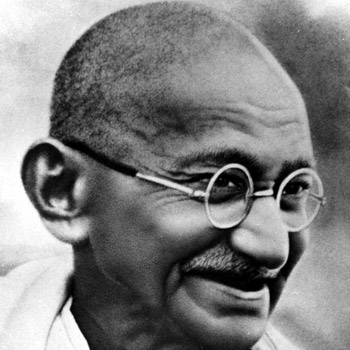
Dr Meghnad Saha
Dr Meghnad Saha was a visionary Indian astrophysicist whose revolutionary work transformed the study of stellar atmospheres and influenced scientific progress and nation-building in India.
Early Life and Educational Journey (1893-1915)
Born on October 6, 1893, in Shaoratoli, a village near Dhaka (present-day Bangladesh), Meghnad Saha emerged from humble beginnings to become one of India's most distinguished scientists. Despite facing severe economic hardships and social discrimination, his brilliance and determination led him to excel in academics.
Growing up in British India, Saha attended the local primary school, walking several miles daily to pursue his education. His exceptional mathematical abilities caught the attention of his teachers early on, earning him scholarships that enabled his further studies.
He secured admission to Presidency College, Calcutta, where he studied alongside other brilliant minds like Satyendra Nath Bose and Prasanta Chandra Mahalanobis. This period laid the foundation for his future contributions to physics and astrophysics.
The Saha Ionization Equation (1920)
Dr. Saha's most significant contribution to science was the development of the Saha Ionization Equation, which explains the chemical and physical conditions in stars. This groundbreaking work revolutionized our understanding of stellar spectra and stellar evolution.
Key Aspects of the Saha Equation:
- Explains the ionization states of elements in stellar atmospheres
- Helps determine stellar temperatures from spectral observations
- Provides insights into stellar composition and evolution
- Forms the foundation of modern astrophysical spectroscopy
The Saha equation became so fundamental to astrophysics that it earned him a nomination for the Nobel Prize in Physics. It remains one of the most important tools in astrophysical analysis today.
Scientific Contributions Beyond Astrophysics
Thermal Ionization:
- Developed theories on thermal ionization of elements
- Studied high-temperature physics
- Contributed to the understanding of solar phenomena
Other Scientific Work:
- Research on molecular spectroscopy
- Studies on the upper atmosphere
- Contributions to statistical mechanics
- Work on radiation pressure and its effects
Institution Building and Scientific Leadership
Dr. Saha was not just a theoretical physicist; he was also a passionate institution builder and advocate for science education in India:
- Founded the Institute of Nuclear Physics (now Saha Institute of Nuclear Physics) in Calcutta
- Established the journal "Science and Culture."
- Helped develop India's first cyclotron
- Advocated for scientific education in Indian languages
Social and Political Contributions
Beyond his scientific work, Dr. Saha was deeply involved in national development:
- Served as a member of Parliament (1952-1956)
- Advocated for river valley projects and flood control
- Promoted scientific and industrial research for national development
- Championed calendar reform in India
Awards and Recognition
- Fellow of the Royal Society (FRS) in 1927
- President of the National Institute of Sciences of India (1937-1938)
- Hughes Medal of the Royal Society (1940)
- Padma Bhushan (posthumously)
- Member of multiple international scientific academies
Legacy and Continuing Influence
Dr. Saha's legacy continues to influence modern science in several ways:
- The Saha equation remains fundamental to astrophysical research
- His approach to institution-building serves as a model for scientific organizations
- His advocacy for science education in regional languages influences educational policy
- The Saha Institute of Nuclear Physics carries forward his vision
Personal Life and Final Years
Despite his immense contributions to science, Saha remained modest and dedicated to national development until his death on February 16, 1956. His sudden passing while walking to the office of the Planning Commission symbolized his lifelong dedication to both science and national progress.
Conclusion
Dr. Meghnad Saha exemplified the perfect blend of pure scientific pursuit and practical application for national development. His life demonstrates how original scientific thinking, combined with dedication to social progress, can transform both science and society. His legacy continues to inspire generations of scientists and serves as a reminder of India's significant contributions to world science.