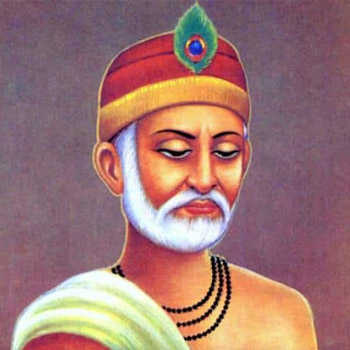
Abdul Ghaffar Khan
Khan Abdul Ghaffar Khan, also revered as Bacha Khan or Badshah Khan and famously known as the “Frontier Gandhi”, was a towering figure in the struggle against British colonial rule in India and a champion of nonviolent resistance. Born in 1890 in the village of Utmanzai in the Peshawar Valley of the North-West Frontier Province (now in Pakistan), he emerged from a prosperous Pashtun Muhammadzai family and dedicated his life to the upliftment of his people and the cause of Indian independence through peaceful means.
From his early years, Ghaffar Khan was deeply engaged in social reform, believing that education and social development were essential foundations for freedom. At just twenty, he founded schools to improve literacy and education among Pashtuns, a community often characterized by its martial traditions and historical violence. His vision was revolutionary for the region: to replace the cycle of violence with nonviolent resistance and social service.
His political awakening began during his opposition to the oppressive Rowlatt Act in 1919, which permitted detention without trial. He soon joined the Khilafat Movement, which aimed at preserving the Ottoman Caliphate and uniting Indian Muslims, and quickly rose to leadership in his district. However, the most defining chapter of his activism began in 1929 when he founded the Khudai Khidmatgar ("Servants of God") movement, popularly known as the Red Shirt Movement. It called for nonviolent resistance to British rule and focused on social reform, unity, and resisting colonial oppression through peaceful means.
The Khudai Khidmatgar was extraordinary for mobilizing up to 100,000 Pashtuns in a disciplined, nonviolent army. Its members pledged to refrain from violence and revenge and to serve humanity, advocating for education, communal harmony, hygiene, and political awareness. This movement faced persistent and brutal repression by the British colonial authorities, including imprisonments and massacres, yet remained steadfast in its commitment to nonviolence.
Khan Abdul Ghaffar Khan was not only a political leader but a spiritual force, deeply influenced by Islam and the philosophy of Mahatma Gandhi. Their shared commitment to nonviolence and Hindu-Muslim unity earned Khan the nickname “Sarhadi Gandhi” or “Frontier Gandhi”. He worked closely with Gandhi and supported the Indian National Congress, participating in national movements while representing the interests of the Pashtuns.
Despite his dedication to Indian unity, Khan staunchly opposed the Partition of India in 1947. Choosing to remain in Pakistan after independence, he continued advocating for the rights of Pashtuns and sought autonomy through the idea of Pashtunistan. His political stance led to repeated imprisonments, harassment, and eventual exile to Afghanistan, where he lived until 1972 before returning to Pakistan.
Khan Abdul Ghaffar Khan’s legacy is profound: a fearless advocate of nonviolence, social reformer, and political leader who refused to compromise on his principles of peace and justice. He was also the first non-Indian recipient of India’s highest civilian honor, the Bharat Ratna, awarded in 1987. He passed away on January 20, 1988, in Peshawar and was buried in Jalalabad, Afghanistan, symbolizing his lifelong struggle across national borders.
His writings, including his autobiography My Life and Struggle, encapsulate his vision of a peaceful and just society. Khan’s life remains a powerful example of the transformative power of nonviolence and dedication to human dignity in the face of injustice and oppression.
In summary, Abdul Ghaffar Khan was a unique figure who bridged faith, culture, and political activism. His pioneering leadership of the Khudai Khidmatgar challenged the violent norms of his society and colonial rule, leaving an enduring legacy of peace, resistance, and hope for marginalized peoples.