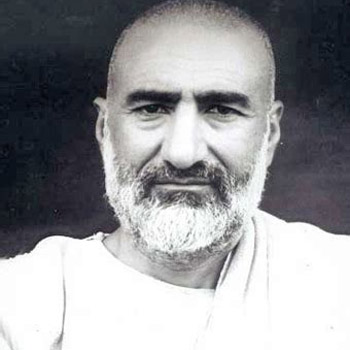
Maharaja Ranjit Singh
Maharaja Ranjit Singh was born in Gujranwala in present-day Pakistan, on 13th November, 1780. His father Mahan Singh was the chief of Sukerchakia Misl, one of the 12 Sikh Misls of Punjab which emerged in 18th century AD.
At the age of 12, he became the leader of the Sukerchakia Misl, after the death of his father. He was given the title of 'Sher-i-Punjab' for saving Lahore from Afghan invasions. In 1799, Ranjit Singh established a unified Sikh empire after conquering Lahore. In 1801, he proclaimed himself as the Maharaja of Sikh empire. His rule was referred as 'Sarkar Khalsa' and his court as 'Darbar Khalsa.' To honour Guru Nanak Devji, he ordered the minting of new coins known as 'Nanak Shahi.' He was the first Sikh ruler of Punjab who ruled for almost 40 years (1801-1839.)
His empire included the former Mughal provinces of Lahore and Multan besides part of Kabul and the entire Peshawar. The boundaries of his state went up to Ladakh the northeast, Khyber Pass in the northwest and up to Panjnad in the south where the five rivers of Punjab fell into the Indus.
Maharaja Ranjit Singh signed the Treaty of Amritsar (1809) with the East India Company. The Treaty is also known as the Minto-Metcalfe Treaty under which both the powers agreed to the Sutlej River as the boundary between the two powers, preventing Ranjit Singh from expanding his rule southward and the British from encroaching into his territory.
He combined the strong points of the traditional Khalsa army with western advances in warfare to raise Asia's most powerful indigenous army of that time. He also employed a large number of European officers, especially French, to train his troops. He created special army named 'Fauj-i-Khas' brigade led by the Europeans- General Jean-Baptiste Ventura and General Jean-Francois Allard.
At the time of his death, he was the only sovereign leader left in India, all others having come under the control of the East India Company in some way or the other.
The Maharaja was known for his just and secular rule; both Hindus and Muslims were given powerful positions in his darbar. He embarked on a public campaign to restore Sikh temples-most notably rebuilding the Harmandir Sahib, the Golden Temple, at Amritsar in marble (1809) and gold (1830) while also donating a tonne of gold to plate the Hindu Kashi Vishwanath temple to Lord Shiva in Varanasi. He banned the slaughter of cows.
Maharaja Ranjit Singh passed away on June 27, 1838. His death was followed by two Anglo-Sikh Wars (1845- 1846 and 1848-1849), which brought an end to the Sikh empire.