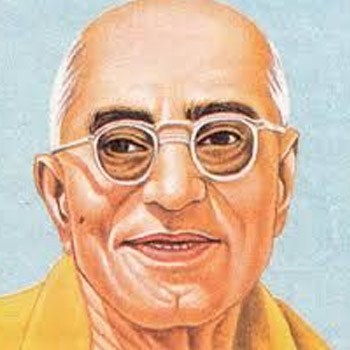
On the night of 18 April 1930, a group of roughly sixty-five young revolutionaries led by school teacher Surya Sen stormed two British armouries in Chittagong (now Chattogram, Bangladesh), seized weapons, cut telegraph and rail links, and declared a short-lived provisional revolutionary government. Unable to find ammunition, they retreated to the Jalalabad hills, where a fierce gun battle with colonial troops followed four days later. The raid failed militarily but became one of the most galvanizing episodes of India's anti-colonial struggle, notable for its meticulous planning, its guerrilla tactics, and the direct participation of women revolutionaries such as Pritilata Waddedar and Kalpana Dutta.
In the spring of 1930, while much of British India's attention was fixed on Mahatma Gandhi's Salt March, a very different kind of resistance was taking shape more than a thousand miles away in the port town of Chittagong in eastern Bengal. There, a network of young revolutionaries, students, and a schoolmaster with a gift for organization had spent nearly a decade preparing for a single, audacious night. What they carried out on 18 April 1930 has come to be known as the Chattogram Armoury Raid, one of the boldest armed actions of the entire freedom movement.
Key Facts
| Event | Chattogram Armoury Raid |
|---|---|
| Date | 18 April 1930 |
| Location | Chattogram (then Chittagong), Bengal, British India (now Bangladesh) |
| Organizer | Indian Republican Army, Chittagong Branch |
| Principal Leader | Surya Sen ("Master Da") |
| Key Associates | Ganesh Ghosh, Ananta Singh, Lokenath Bal, Ambika Chakrabarty, Pritilata Waddedar, Kalpana Dutta |
| Targets | Police Reserve Armoury, Auxiliary Force Armoury, telegraph office, railway lines |
| Follow-up Battle | Battle of Jalalabad, 22 April 1930 |
| Outcome | Weapons seized but no ammunition found; group dispersed after Jalalabad; long manhunt followed |
The Setting: Chittagong Under Colonial Rule
By the late 1920s, Chittagong was a comparatively minor administrative town on the Bay of Bengal, but it held real strategic value: a working port, a railway junction, a European Club that symbolized colonial social life, and, crucially, two armed depots, a police armoury and an auxiliary force armoury, that stored rifles and ammunition for the town's small garrison of colonial forces. For a revolutionary movement that had long struggled to acquire weapons, this made Chittagong an unusually attractive target.
Bengal in this period was a hotbed of revolutionary nationalism. Alongside the mainstream Congress-led movement of civil disobedience, a parallel current of armed revolutionary politics had taken root among educated Bengali youth, many of them drawn from student associations, gymnasiums, and secret societies that combined physical training with clandestine political organizing. It was within this milieu that Surya Sen built his following.
Surya Sen and the Indian Republican Army
Surya Sen, affectionately called Master Da ("respected teacher") by his followers, taught at the National School in Chittagong and had been active in nationalist politics since the early 1920s, including a stint with the Congress during the non-cooperation movement. Disillusioned with the pace and methods of constitutional protest, he turned toward organized armed resistance and began assembling a disciplined cadre of mostly teenage and twenty-something recruits.
Sen structured this cadre as the Indian Republican Army, Chittagong Branch, a name that deliberately echoed contemporary revolutionary movements elsewhere and signaled the group's ambition to act as a disciplined fighting force rather than a loose conspiracy. Recruits underwent physical training, were schooled in secrecy and compartmentalized planning, and were assigned specific roles well in advance of any operation. Sen's leadership style combined strict discipline with genuine personal warmth, which earned him deep loyalty among his young followers, many of whom were still in their teens when they joined.
Planning for a major strike against colonial authority in Chittagong began years before it was executed. The group settled on a multi-pronged plan: seize the town's two armouries to arm a wider uprising, sever the telegraph and telephone lines to delay reinforcements, disable the railway to cut off troop movement from Chittagong to Calcutta, and simultaneously proclaim a provisional revolutionary government to signal that this was an act of state-building defiance, not mere sabotage.
The Night of 18 April 1930
The raid was timed for Good Friday, a public holiday when European officers and many British residents would be away from their posts, attending church services or social events, leaving the town's defenses thin. Around sixty-five revolutionaries, organized into small squads, assembled that evening under the pretext of ordinary activity before moving into position after dark.
One squad, led by Ganesh Ghosh, struck the Police Reserve Armoury. Another, under Lokenath Bal, took the Auxiliary Force Armoury. Separate teams cut telegraph and telephone wires around the town and damaged the rail track to disrupt the movement of colonial reinforcements. Both armouries fell quickly, with minimal resistance, and the raiders seized rifles and other equipment stored there.
With the armouries secured, the group assembled at the drill ground of the Auxiliary Force building, where Surya Sen took the salute of his young fighters and formally proclaimed a provisional revolutionary government in the name of the Indian Republican Army. It was a symbolic act, more a statement of intent than an act with lasting administrative reality, but it carried enormous propaganda weight: for a brief moment, colonial authority in Chittagong had been visibly and deliberately displaced.
Retreat and the Battle of Jalalabad
Without ammunition to sustain a prolonged fight in the town, and aware that British reinforcements would soon arrive from Calcutta, Sen ordered a retreat into the hills outside Chittagong, near the village of Jalalabad. The group hoped to regroup, reorganize, and continue the struggle from a position of greater safety.
On 22 April 1930, colonial troops located the revolutionaries on Jalalabad hill. What followed was a pitched, hours-long engagement, the Battle of Jalalabad, fought largely with the rifles seized four days earlier. Casualty accounts vary, but a significant number of revolutionaries were killed, and the group's cohesion, once so carefully built, was shattered. Survivors scattered into the surrounding villages and countryside, and many went into hiding, sheltered by sympathizers or moving in small, disconnected groups to evade capture.
The Manhunt and the Fate of the Leaders
The raid triggered one of the largest manhunts colonial Bengal had seen. Troops and police combed the Chittagong countryside for months, and dozens of suspected participants and sympathizers were arrested, tried, and in many cases deported to the Cellular Jail in the Andaman Islands, then the colonial government's harshest place of detention for political prisoners.
Surya Sen himself evaded capture for nearly three years, moving between hideouts with the help of a loyal underground network, and continued to organize sporadic acts of resistance during this period, including further attacks aimed at demoralizing colonial administration in the region. He was finally betrayed and arrested in February 1933. Following a lengthy trial marked by allegations of torture during interrogation, he was sentenced to death and executed by hanging on 12 January 1934.
Several of his closest associates met similarly severe fates or endured long prison terms, while others survived into independent India and went on to public life. The raid's leadership thus paid an extraordinarily high personal price for an operation that, in narrow military terms, achieved only a fraction of its objectives.
Women in the Chittagong Resistance
One of the most historically significant aspects of the broader Chittagong movement was the direct combat role played by women revolutionaries, a rarity in the armed wing of the independence struggle at that time. Pritilata Waddedar, a college-educated member of Sen's network, led an armed attack on the Pahartali European Club near Chittagong in September 1932, a raid targeting a venue that symbolized racial segregation under colonial rule; she died during the operation rather than be captured. Kalpana Dutta, another close associate of Sen, was arrested, tried, and sentenced to transportation for life before eventually being released; she remained politically active for decades afterward. Their participation marked a notable departure from the largely male composition of earlier revolutionary cells and left a lasting mark on the movement's memory.
Why the Raid Still Matters
Judged purely by its immediate military outcomes, the Chattogram Armoury Raid was a failure: the ammunition needed to hold the town was never found, the provisional government lasted only hours, and the Battle of Jalalabad scattered the very force Sen had spent years building. Yet the raid's historical significance lies elsewhere.
- Organizational sophistication: The operation demonstrated a level of planning, discipline, and coordinated multi-target execution rarely seen in the revolutionary wing of the independence movement up to that point.
- Symbolic defiance: By briefly declaring a provisional government, the raiders directly challenged the legitimacy of colonial authority rather than merely protesting against it, a distinction that resonated widely in nationalist circles.
- Youth mobilization: Most participants were teenagers or in their early twenties, illustrating how deeply anti-colonial sentiment had penetrated a generation of Bengali students.
- Gender history: The combat participation of Pritilata Waddedar and Kalpana Dutta expanded the historical narrative of the freedom struggle beyond its predominantly male framing.
- Enduring memory: Surya Sen's execution and the raid itself became touchstones in later nationalist literature, cinema, and public memory in both India and Bangladesh, where the town's name, now officially rendered Chattogram, carries this history into the present.
The raid is often studied alongside contemporaneous events such as the Salt March and the actions of revolutionaries like Bhagat Singh as part of a broader picture of the diverse, sometimes competing, strategies that together constituted India's path to independence, from mass non-violent civil disobedience to organized armed insurgency. Historians generally treat the Chittagong episode as a case study in how localized, tightly organized revolutionary cells operated within, and sometimes in tension with, the wider nationalist movement led by the Indian National Congress.
Frequently Asked Questions
It was an armed uprising on the night of 18 April 1930 in Chittagong, in which revolutionaries led by Surya Sen seized two British colonial armouries, disrupted communication and rail links, and briefly declared a provisional revolutionary government.
Surya Sen, known as Master Da, led the operation through the Indian Republican Army, Chittagong Branch. Key participants included Ganesh Ghosh, Ananta Singh, Lokenath Bal, Ambika Chakrabarty, and later, women revolutionaries Pritilata Waddedar and Kalpana Dutta.
The revolutionaries seized weapons but could not locate the ammunition stored separately from the armouries, leaving them unable to sustain an armed defense of the town against approaching colonial reinforcements.
It was an engagement on 22 April 1930 between the retreating revolutionaries and colonial troops on Jalalabad hill outside Chittagong, resulting in significant casualties and the dispersal of Sen's group.
He evaded capture for nearly three years, continuing underground resistance, before being arrested in February 1933. He was tried and executed by hanging on 12 January 1934.
It is remembered as a defining episode of armed resistance in India's independence movement, notable for its planning, its youth-led cadre, and the combat participation of women revolutionaries, and it remains a significant part of the historical memory of both India and Bangladesh.
Conclusion
The Chattogram Armoury Raid endures not because it achieved its immediate military aims, but because of what it revealed: that colonial authority, however entrenched, could be directly and deliberately confronted by a disciplined, self-organized group of young Indians willing to risk everything. Surya Sen's careful years of preparation, the coordinated strike on 18 April 1930, the desperate stand at Jalalabad, and the eventual sacrifice of its leaders together form one of the most vivid chapters in the long and varied history of India's struggle for independence — a reminder that the road to freedom was built not by a single strategy, but by many, often converging in the same cause from very different directions.