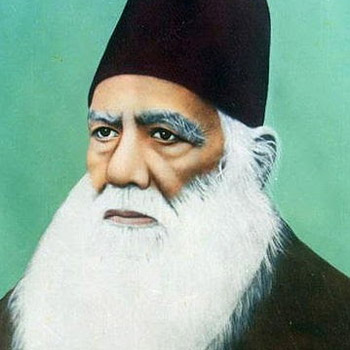
Rasbehari Ghosh
Sir Rash Behari Ghosh (December 23, 1845 – February 28, 1921) was a distinguished Indian politician, lawyer, social worker, and philanthropist renowned for his moderate and constitutional approach to the Indian freedom movement and his significant contributions to education and social reforms in Bengal and India at large.
Early Life and Education
Born in Torkona village in the Khandaghosh area of Burdwan district, Bengal Presidency, Rash Behari Ghosh hailed from the Sadgope caste. He received his early education at Burdwan Raj Collegiate School and went on to Presidency College, Kolkata, where he graduated in 1865. Remarkably, he secured first-class honors in his MA in English, becoming the first Indian to achieve this distinction. He completed his Bachelor of Laws degree in 1867, passed the Law examination with honors in 1871, and later earned a Doctor of Laws degree in 1884. Ghosh also held the prestigious Tagore Law Professorship at Calcutta University in 1875 - 76.
Political Career and Ideology
He was a prominent member of the Indian National Congress and closely aligned with its moderate wing, advocating constitutional reform and social justice rather than radical activism. He served as the President of the Congress for two consecutive terms, presiding over the historic 1907 Surat session, which witnessed the party's split between moderates and extremists, and again at the 1908 Madras session.
He was a member of the Bengal Legislative Council (1891–94, 1906–09) and later served on the Council of India. Throughout his political career, Ghosh maintained a deep faith in progress achieved through gradual reform and opposed radicalism. His moderate approach aimed at uplifting Indians within British India’s political framework.
Contributions to Education and Philanthropy
Rash Behari Ghosh was a passionate advocate for education and scientific progress. He made substantial financial donations to educational institutions and scientific research:
- Founded the Torkona Jagabandhu School in 1894.
- Established a significant endowment of ten lakh rupees for scientific studies at Calcutta University in 1913.
- Donated thirteen lakh rupees to establish the National Council of Education at Jadavpur, which later evolved into Jadavpur University, becoming the first president of the NCE.
- Financially supported Bengal Chemical and Pharmaceutical Works, contributing nearly one-third of its initial capital.
- Sponsored schools and hospitals in his native village and surrounding areas, showing deep commitment to rural development.
His legal scholarship also left a lasting legacy, particularly his authoritative work on "Law Mortgages in British India", which became a reference for lawyers and judges.
Honors and Legacy
Ghosh’s contributions earned several prestigious honors from the British government despite his nationalist stance. These included:
- Companion of the Order of the Indian Empire (CIE) in 1896.
- Companion of the Order of the Star of India (CSI) in 1909.
- Knighthood in 1915.
He was also awarded an honorary Doctor of Laws degree by Calcutta University in 1884.
Sir Rash Behari Ghosh passed away on February 28, 1921, in Darjeeling. His legacy endures prominently in Bengal and Indian history. Kolkata’s Rashbehari Avenue is named in his honor, a tribute to his profound impact on the city's and the country's social and political landscape. Institutions like Sir Rashbehari Ghosh Mahavidyalaya, established in 2010 in the Burdwan district, continue to celebrate his contributions. His efforts to support education, scientific research, and social welfare have left a lasting imprint on Bengal’s development and India’s journey toward independence, embodying a life dedicated to the service of his people through law, politics, and philanthropy.
Sir Rash Behari Ghosh remains an epitome of the moderate nationalist leadership that combined intellectual excellence with social commitment, leaving behind a legacy of reform, progress, and philanthropy in colonial India. His life is a reminder of the power of education, constitutional politics, and selfless service in the struggle for India’s freedom and development.