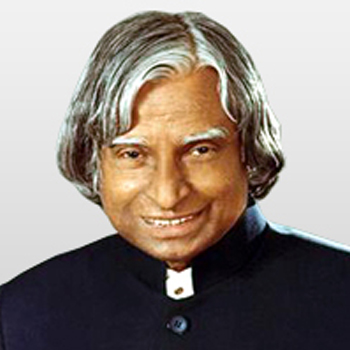
Raja Rammohan Roy
Raja Rammohan Roy (1772–1833) is remembered as one of the foremost reformers of modern India, often hailed as the "Father of the Indian Renaissance". A visionary thinker, social reformer, and educationist, he played a crucial role in reshaping Indian society during the late 18th and early 19th centuries. His efforts bridged traditional Indian values with modern Western ideas, laying the intellectual foundation for India’s social, political, and cultural awakening under colonial rule.
Early Life and Background
Rammohan Roy was born on May 22, 1772, in Radhanagar, a small village in the Hooghly district of Bengal. His father, Ramkanto Roy, was a Vaishnavite of considerable means, while his mother, Tarini Devi, followed Shaivism. This exposure to differing religious traditions deeply influenced Rammohan’s intellectual outlook.
He received a traditional education in Persian and Arabic at Patna, where he studied Islamic philosophy, law, and theology. Later, he learned Sanskrit at Varanasi, mastering classical Hindu scriptures such as the Vedas and Upanishads. Simultaneously, his study of Persian works like those of Sufi philosophers and exposure to Christian scriptures gave him a cosmopolitan religious perspective rare for his time.
Intellectual Foundations
Rammohan Roy’s early writings reveal his critical approach toward religious practices based on unreason and superstition. In 1803, he authored Tuhfat-ul-Muwahhidin (Gift of Monotheists), where he strongly criticized idol worship and promoted monotheism. His philosophical orientation was shaped by:
- Sanskrit scriptures: Especially the Upanishads, which emphasized monotheism and spiritual rationality.
- Islamic rationalism: He admired Islamic emphasis on monotheism and morality.
- Christian theology: He respected the ethical teachings of Christianity and engaged deeply with the Bible, without necessarily aligning with missionary zeal.
Through this synthesis, Rammohan developed a reformist vision that sought to cleanse Indian society of regressive customs while embracing the rational and ethical aspects of multiple traditions.
Social Reform and the Struggle Against Sati
Perhaps Rammohan Roy’s most celebrated achievement was his tireless campaign against Sati, the practice where widows were forced or expected to immolate themselves on their husband’s funeral pyres. He witnessed the brutal reality of Sati from close quarters and strongly opposed it, both through writings and petitions to the British authorities.
He argued using Hindu scriptures themselves to prove that Sati was not mandated by the Shastras. His efforts, alongside support from Governor-General Lord William Bentinck, culminated in the landmark regulation of 1829, which declared Sati illegal and punishable under law. This was one of the earliest victories of social reform in colonial India.
Apart from Sati, he campaigned against child marriage, polygamy, and restrictions on the rights of widows. His vision of social reform placed women’s dignity and education at the forefront.
The Brahmo Samaj
In 1828, Rammohan Roy established the Brahmo Sabha, which later evolved into the Brahmo Samaj. This institution became the nucleus of religious and social reform in India. The Samaj stood for:
- Monotheism, rejecting polytheism and idol worship.
- Opposition to caste distinctions and meaningless rituals.
- Emphasis on prayer, moral behavior, and social service.
- Promotion of gender equality and widow remarriage.
The Brahmo Samaj inspired generations of reformers and became a significant force in shaping the ethical and spiritual discourse of 19th-century India.
Advocacy for Education and Modern Ideas
Rammohan Roy realized that modern education was crucial for India’s intellectual progress. He favored English-based education and scientific learning over traditional Sanskrit-based orthodox education.
- In 1817, he supported the establishment of the Hindu College (later Presidency College) in Calcutta.
- He founded the Anglo-Hindu School in 1822 to promote a curriculum that combined Western science with Indian studies.
- He also worked towards disseminating knowledge by translating religious texts and producing journals.
His journals like Sambad Kaumudi in Bengali and Mirat-ul-Akhbar in Persian became platforms for expressing reformist ideas, critiquing orthodox practices, and spreading democratic thought.
Political Thought and National Awakening
Rammohan Roy was not just a religious and social reformer but also a pioneer of political awakening in India. He advocated for freedom of the press, equality before the law, and the rights of Indians under British rule. His petitions to the British government demanded administrative and judicial reforms, representation of Indians, and a liberal political structure.
He believed in reform within the framework of constitutional monarchy and emphasized rational governance inspired by enlightenment principles. His vision of a just and democratic polity influenced later nationalist leaders.
Final Years in England
In 1831, Rammohan Roy traveled to England as an ambassador of the Mughal Emperor Akbar II, to plead for his pension and allowances. While in England, he engaged with British intellectuals, abolitionists, and reformers. He was warmly received and admired as a great Asian thinker.
On September 27, 1833, he passed away in Bristol, England, due to meningitis. He was buried there, and his tomb remains a place of homage for admirers worldwide.
Legacy
Raja Rammohan Roy’s legacy lies in his role as a precursor to modern India’s reformist and nationalist movements. He combined the rational spirit of the Enlightenment with the ethical spirit of Indian philosophical tradition. His enduring contributions include:
- Abolition of Sati and progress in women’s rights.
- Foundation of Brahmo Samaj, spearheading religious reform.
- Advocacy for modern education, freedom of press, and liberal politics.
- Setting the intellectual groundwork for India’s social and political renaissance.
Jawaharlal Nehru later described him as "the founder of Indian nationalism", while Rabindranath Tagore saw him as a pathfinder who showed India the way to modernity.
Rammohan Roy remains a towering figure who exemplified how reform, rooted in reason and humanity, can transform society. His vision of a just, rational, and progressive India continues to inspire generations.